Political Analysis (18): How Will the Eternal Illusions of the Tyrant Hamad and the Gulf Rulers Come to an End? The Americans’ Withdrawal from the Region Will Be More Severe Than the End of the British Empire
The Bahraini regime has not yet freed itself from the circle of illusions that has surrounded it for so long. That circle grows larger with every turn in which it becomes entangled in its familiar policy: denying reality, fabricating an imagined reality, and turning it into a belief imposed upon itself and upon the people.
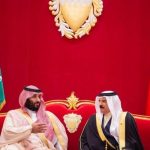
The behavior of the Al Khalifa and the Gulf tyrants in general can be understood by examining the collection of illusions contained within that circle. The first is the illusion of permanent dominance through authoritarian rule. The second is the illusion that alignment with outside powers is a permanent guarantee of the survival of their repressive regimes. The third concerns the regimes’ and outside powers’ misjudgment of the patience of the peoples of the Gulf, particularly the people of Bahrain, and their failure to understand the limits of popular endurance and the new options to which those peoples may resort. In Bahrain, the excessive sense of grandeur that has taken hold of “the tyrant Hamad” can be attributed to these illusions and their ramifications. They also help explain all the crimes and deadly decisions he has undertaken, both domestically and abroad.
How did the Al Khalifa imagine that the British Empire would remain eternal in helping them confront popular protests? And why did the tyrant Hamad express his disappointment over the end of British colonial rule?
For many decades, the Al Khalifa placed their hopes in the belief that the British would remain the great empire that protected their existence in Bahrain forever, guaranteeing the stability of their rule in the face of popular protests. Several historical episodes demonstrated that British colonial rule did, in fact, continue to provide this protection to the Al Khalifa, devising one means after another to preserve the stability of their rule. This led them, generation after generation, to credit the British with this role, insist on refusing to regard them as a foreign occupying power, and speak of them in the manner expressed openly by the tyrant Hamad during an official reception in London in mid-May 2013, when he said:
“Our father always wondered why Britain had decided to withdraw from the Gulf region. No one had asked them to leave, or to leave Bahrain.”
This statement, spoken in the name of his ancestors and forefathers, sums up the nature of the relationship that had linked the two sides from the beginning.
Despite the new tools the British employed after their military withdrawal from the Gulf, and their continued collusion with the rulers to thwart the peoples’ hopes of building modern, dignified states, crises continued to unfold in the region and pursue everyone. The rulers did not enjoy lasting stability in their illegitimate regimes.
Why is alignment with American and Zionist power a continuation of the Al Khalifa’s earlier illusion with the British? And why will the moment of American decline be more painful for the Gulf tyrants and the region?
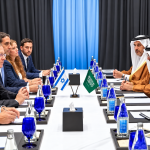
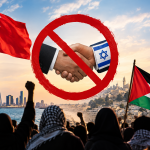
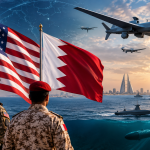
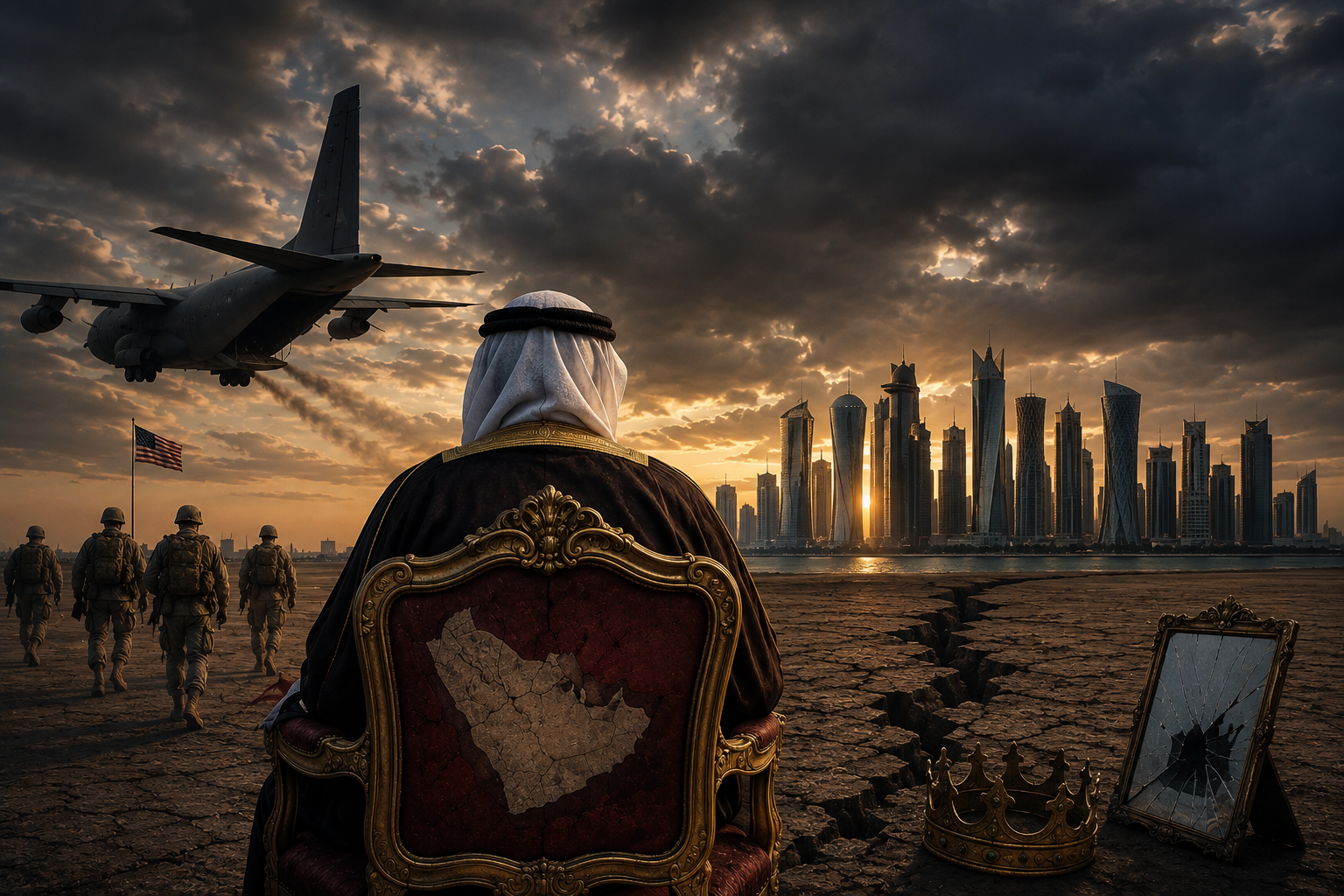
For the Al Khalifa and the other Gulf rulers, alignment with American power—and with the Zionist entity that operates under its protection—represents the alternative that compensates for the loss of British colonial power. Yet alignment with the Americans and the Zionists remains a continuation of the earlier illusion, because what happened to the British will happen again to the Americans and their appendages in the region, not only the Zionist appendage but the sheikhdoms as well
Just as the tyrant lamented the British departure from the country, he will also find himself in even greater sorrow as he witnesses the decline of the American Empire. This decline will be more severe than the old British retreat, because the Americans’ collapse is taking place amid military strikes and geopolitical defeats to their expansion and spheres of influence, in the manner carried out by Iran and the Resistance Front in response to American-Zionist aggression. The complicity of the rulers of the Gulf and the region in this aggression will make the confrontation take a more decisive form and course, producing consequences that go beyond those of the British withdrawal from the Gulf in 1971.
When will the regimes’ illusion that the peoples will remain silent in the face of the consequences of the ongoing confrontation in the Gulf and the region collapse? And how will the people stop the collapse of Gulf societies resulting from the dominance of the values of the American-Zionist alliance over the regimes?
Most experts affirm that the ongoing confrontation between Iran and America will have deep and far-reaching consequences extending beyond the geography of the confrontation in which the exchange of fire is taking place. Yet many fail to examine the effects accumulating within the social fabric of Gulf societies, and the dangerous consequences intensifying among these societies, placing them in an unprecedented state of moral collapse, cultural penetration, and the alienation of public consciousness among both the public and the elites. This leaves these societies exposed to the flames of sectarian hatred, animosity, and mutual strife
..Ultimately, the internal collapse of Gulf societies will weaken the systems of government, after which crises of legitimacy will spread. On the other hand, contrary to the Gulf regimes’ illusion that the peoples will remain silent and submissive, these consequences will produce escalating popular protests, because the peoples will find themselves in a situation in which they can no longer conceal their rejection of the catastrophic conditions prevailing, particularly as the degree of alignment between the Gulf regimes, the Americans, and the Zionists increases. All of them will be part of a shared system of interests hostile to the nation, its identity, and its religion, in contrast to the Resistance Front, which expresses the values of this nation in freedom and liberation from foreign domination.