Weekly Event (Saturday – July 4, 2026): CENTCOM Continues to Manipulate Regional Security
On July 1, 2026, the U.S. Central Command (CENTCOM) held a regional security dialogue in Bahrain, attended by representatives of the armed forces of 12 countries, including the Gulf states, as well as Egypt, Jordan, Lebanon, Syria, and Yemen. It was the first such meeting since the U.S.-Israeli aggression against Iran last February.
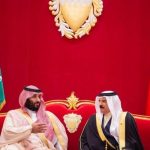
The military meeting was held at the headquarters of the Bahrain Defence Force. Bahrain’s ruler, Hamad bin Isa Al Khalifa, received CENTCOM Commander General Brad Cooper. The meeting followed several previous meetings between the two sides over the past few weeks.
Observers consider the meeting part of U.S. efforts to reaffirm its commitment to protecting the countries of the region and to maintaining military support for the Gulf governments amid growing concerns that the United States may reduce its regional presence following the failure of the military campaign against the Islamic Republic. These concerns also prompted the recent visit of the U.S. Secretary of State to the Gulf, where he met with the Gulf foreign ministers in Manama.
Iranian officials dismissed the significance of the CENTCOM meeting. Iranian Foreign Minister Abbas Araghchi recalled CENTCOM’s failure to protect itself during the conflict and stated that “peace and security in the region must be comprehensive and achieved without foreign intervention.”
Why Have the Gulf States Failed to Learn the Lessons of the Failed Aggression Against the Islamic Republic?
According to the article, the CENTCOM meeting in Manama provided further evidence of the continued cooperation of the Gulf governments with U.S. plans for military action against neighboring countries, particularly the Islamic Republic of Iran. The article argues that this has been demonstrated on several occasions through these governments’ support for U.S. accusations portraying Iran as a threat.
Following the meeting, General Brad Cooper visited U.S. troops stationed in Bahrain and held a ceremony honoring them, particularly personnel serving in the artillery units and the missile and drone defense system.
Cooper claimed that U.S. forces had shot down 14 drones during the past few weeks. According to the article, this confirms the continued U.S. military presence in Bahrain and the Gulf, while contradicting statements by Bahrain’s ruler, Hamad bin Isa Al Khalifa, who had attributed the interception of missiles and drones to Bahraini forces and announced the establishment of what he called the “Committee for Documenting the Epic of Resilience.”
The article concludes by stating that analysts believe the Gulf states have not yet understood the regional changes that are taking shape. It also cites Iranian Foreign Ministry spokesman Esmail Baghaei, who said that the Gulf states “must wake up and learn the lessons of the aggression against the Islamic Republic” before it is too late.