Article: A Reading of the Ashura Message Issued by the Chairman of the Shura Council of the February 14 Youth Coalition
The Ashura message issued by the Chairman of the Shura Council of the Bahraini February 14 Youth Coalition on the occasion of the Ashura season of 1448 AH is of particular significance in both its timing and substance. It offers a contemporary reading of the tragedy of Karbala, linking the doctrinal and spiritual dimensions of this historic epic with the current political and regional landscape.
The message begins by portraying Ashura as an epic day that symbolizes the ultimate confrontation between truth and falsehood. It recalls the steadfast stand of Imam Hussein (peace be upon him) against oppression and deviation, sacrificing himself and all that was dearest to him in defense of the religion of his grandfather, Prophet Muhammad (peace and blessings be upon him and his family), and in protection of the values of justice, freedom, and human dignity.
What distinguishes this message is that it goes beyond mere commemoration and mourning, drawing practical inspiration from these values in light of the challenges facing the Islamic Ummah today, particularly with regard to Iran and the role of the Axis of Resistance in confronting the Zionist entity.
The message accords a prominent position to the Islamic Republic of Iran, considering its support for Palestine and Lebanon to be part of its moral and religious duty in confronting injustice. According to the vision presented in the text, this stance reflects courage, sincerity, and commitment to defending the oppressed, thereby embodying the principles of the Husseini revolution in a living and practical manner.
The message further argues that Iran’s acts of defense, deterrence, and courageous resistance are carried out in defense of the dignity of the entire Muslim Ummah, rather than that of any particular sect. This constitutes a clear rejection of sectarian approaches to fundamental causes and reaffirms the unity of purpose in confronting the Zionist project, which, according to the message, makes no distinction between Arabs and Muslims.
In the same context, the message explicitly calls upon Arab and Islamic states to stand alongside Iran in confronting and punishing the aggressor Zionist entity. This represents a notable development in the Coalition’s political discourse, as it moves beyond local narratives toward a broader regional vision rooted in the Husseini principle of resisting injustice, regardless of the magnitude of the sacrifices required.
To reinforce this position, the message cites Imam Hussein’s (peace be upon him) famous declaration: “Humiliation is far from us; Allah refuses that for us,” as well as his saying: “I see death as nothing but happiness, and life with the oppressors as nothing but misery.” These references reflect a position that rejects neutrality or silence in the face of what the message perceives as injustice inflicted upon Palestine, Lebanon, Iran, and Syria.
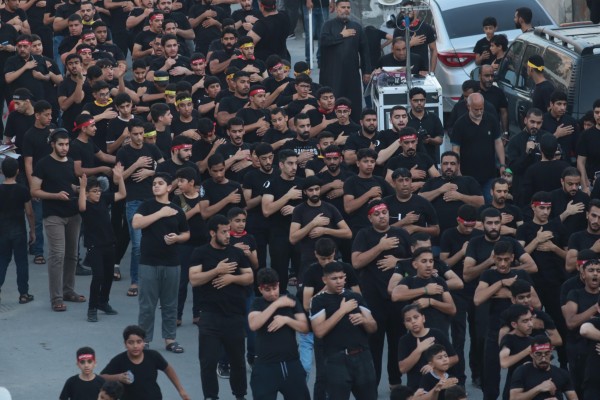
The message also emphasizes that commemorating Ashura should not be limited to mourning and tears alone, but should instead embody awareness, principled commitment, and unwavering adherence to truth. It calls for transforming grief into a commitment to Husseini ethics and to living with dignity without surrendering or yielding to oppression.
In this respect, the message transcends ritual observance and advances an intellectual and political vision, urging people not to remain passive in the face of injustice. It warns that silence regarding the targeting of communities and sects is incompatible with both religious values and the freedom of expression guaranteed by constitutional principles.
The message concludes by affirming that attempts to suppress the truth through intimidation and repression are ultimately doomed to fail. It invokes the example of Lady Zainab (peace be upon her), who transformed captivity into a platform for proclaiming the truth and demonstrated that the power of words can surpass that of the sword.
Overall, the Ashura message presents a comprehensive vision inspired by the events of Karbala, drawing lessons of steadfastness in principle, support for the oppressed, and rejection of injustice in all its forms. It applies these lessons to the contemporary reality of the Islamic Ummah, particularly with regard to the role of Iran and the Axis of Resistance, making it a political and religious document that reflects a shift toward clearer regional positions and a direct linkage between religious conviction and political alignment in confronting common challenges.