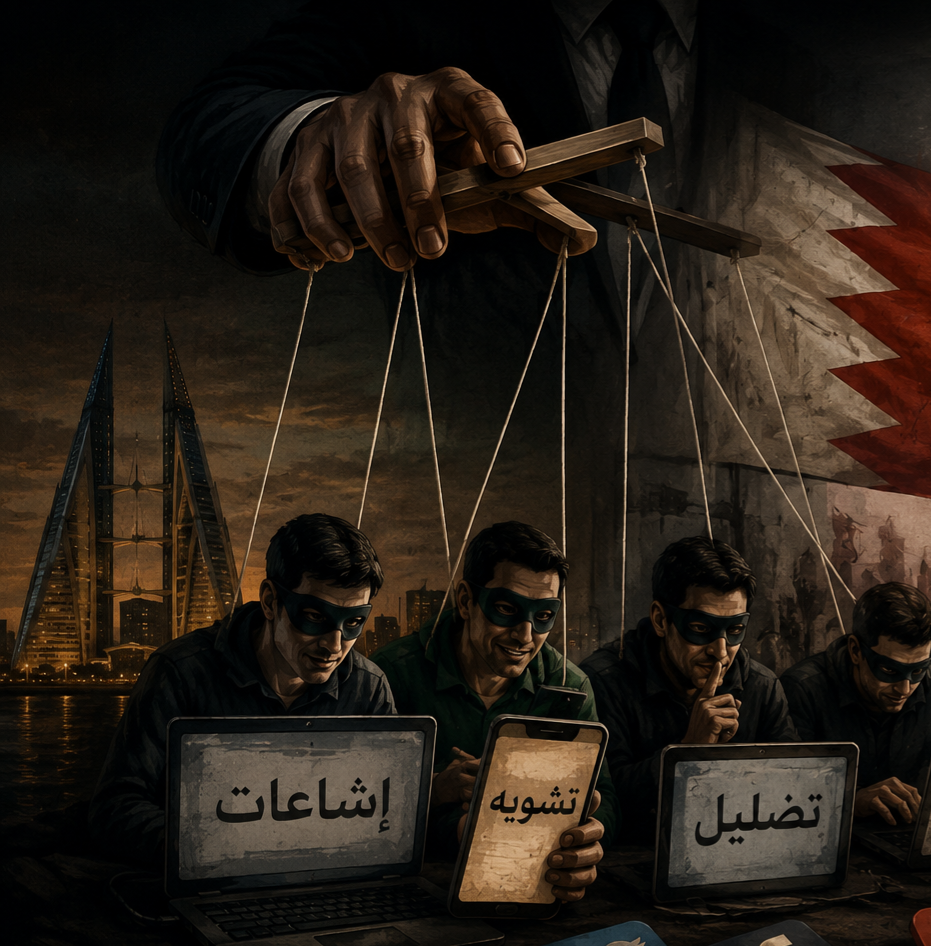
Political Analysis (6): Why Does the “War of Narratives” Need Small-Time Insiders? Propaganda War Criminals in Bahrain
It can be said that the liberation of Lebanon by the Islamic Resistance in 2000 marked the beginning of a new phase in the propaganda war against the nation and its honorable resistance movements. Before that, the agencies responsible for propaganda—especially in the United States and Israel—worked to create misleading narratives and concepts aimed at tarnishing the image of liberation movements in the region, particularly after the victory of the Islamic Revolution in Iran and the growing popularity of resistance movements in Palestine and Lebanon among the peoples of the region and supporters around the world.
Why did this propaganda fail at the time?
This question can be answered by asking another: Why did Arabs from several countries, including Bahrain and Kuwait, join the ranks of the Palestinian resistance in previous decades, and why did this phenomenon later disappear, leading to the current situation in which the resistance itself is criminalized and openly opposed?
At that time, public opinion among both the people and governments was largely aligned with the resistance movement. American and Israeli propaganda activities were limited and exposed. Moreover, those efforts had not yet achieved their intended results or produced a new generation upon which future campaigns could be built. As a result, the resistance continued to gain strength and popularity among the people, forcing governments to avoid openly confronting it. Any hostility toward the resistance would have been perceived by the public as siding with Israel, which remained the nation’s primary enemy.
How did the gradual shift toward Israel take place?
The liberation of southern Lebanon in 2000 by the Islamic Resistance was an important turning point. By then, American and Israeli propaganda had already achieved part of its objectives by weakening the influence of resistance ideology among the public through the gradual introduction of policies promoting relations with Israel and familiarizing people with terms such as “peace with Israel,” “direct negotiations,” and the possibility of reaching peace agreements with Israel within the post-1967 borders.
This process expanded as propaganda increasingly sought to downplay the effectiveness and value of resistance or exaggerate its negative consequences by arguing that resistance provides Israel with pretexts for killing, destruction, and further territorial occupation.
Until 2006, this propaganda largely operated within defined limits, but it gradually achieved two objectives: reducing public support for the resistance and encouraging Arab governments to move away from their traditional anti-Israel policies, replacing them with approaches centered on “peace,” “reconciliation,” and “negotiation.”
Following the 2006 war, however, this propaganda campaign suffered a setback. Public support for the resistance was renewed, and images of its leaders once again appeared throughout Arab capitals as people celebrated what they viewed as the resistance’s victory in the 33-Day War. Later, as Israel studied the lessons of that conflict, alongside the findings of the Winograd Report, efforts intensified to develop more advanced propaganda and disinformation strategies while building on the outcomes of previous campaigns.
What changed after 2011 in the campaign to demonize Iran and the resistance?
According to the article, American and Israeli policymakers concluded that opposition to the resistance needed to emerge from within Arab societies themselves and that Arab governments should adopt a clear stance against it.
This strategy was based on expanding peace and normalization with Israel through a gradual process that culminated in the Abraham Accords of 2020. Sectarian incitement became a key component of the propaganda campaign designed to generate hostility toward Iran and portray the resistance axis as a threat. A broad media network recruited Arab intellectuals and journalists to promote a narrative claiming that the resistance axis was merely an Iranian expansionist project and that Iran—not Israel—was the true enemy of Muslims.
This narrative developed alongside the war in Syria and what the author describes as a systematic effort to blur distinctions, distort facts, alter established principles, and influence a new generation burdened by sectarian tensions, domestic authoritarianism, economic hardships, and a sense of psychological and civilizational defeat.
What about Bahrain and the propaganda campaign against Shiites?
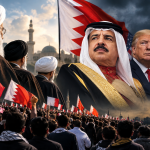
The article argues that the propaganda war led by Israel and the United States cannot be separated from events in Bahrain. According to the author, American-Israeli efforts helped create a political environment in which Bahrain’s ruler seeks to demonize the resistance, portray Iran as the primary enemy, and present it as “more dangerous and more criminal than Israel.” The author claims that these themes moved from pro-Israel Arab circles into the mainstream media discourse of Bahrain and the wider Gulf region.
The author further argues that because Bahrain’s ruler is personally aligned with American and Israeli policies against the resistance and Iran, his government and media outlets have actively promoted a narrative that criminalizes all groups and movements associated with the resistance axis, from Iran to Lebanon. According to the article, this has included campaigns against Bahrain’s Shiite community, which the author views as part of a broader confrontation with the resistance movement and the religious and political values linked to it. Examples cited include criminalizing praise for the resistance and targeting Shiite beliefs and religious practices.
The article concludes by arguing that, alongside those who commit acts of violence and destruction, there are others who wage propaganda campaigns, spread misinformation, and fabricate misleading stories. The author contends that such propaganda actors are no less dangerous than those responsible for bloodshed because they allegedly conceal atrocities, erase evidence, and improve the image of those responsible.
Finally, the author claims that after Israel expanded its influence in the Gulf—particularly in the UAE and Bahrain—and gained significant influence over official narratives, one of the lessons it learned was the advantage of recruiting local voices to carry out propaganda efforts. In other words, the author argues that Arab and Gulf individuals are being used to repeat the same messages promoted by Israeli military spokespersons, Israeli public diplomacy efforts (“Hasbara”), and Unit 8200 of the Israeli military.