In recent times, the Al Khalifa have been pursuing parallel tracks of action, both inside and outside Bahrain. The principal domestic track consists of moving forward with efforts to encircle the social base of the opposition—or, more precisely, waging a war against the country’s indigenous citizens. What is new in this regard is that the Al Khalifa have crossed their previous “red lines” and are now waging this confrontation openly, directing it toward the religious beliefs and rituals of the majority of the country’s Shiite citizens. This was a course that the tyrant Hamad pursued—with calculated caution—before the war on Iran. That caution was particularly pronounced before 2011, but it gradually diminished until the entire mask fell away following the latest war on Iran. This exposure and unmasking leads directly to the other parallel track of Al Khalifa policy: their relationship with the Zionist entity.
Is the Al Khalifa relationship with the Zionists connected to normalization agreements and the regional conflict, or was it established for domestic reasons as a result of the erosion of their relationship with the people?
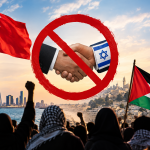
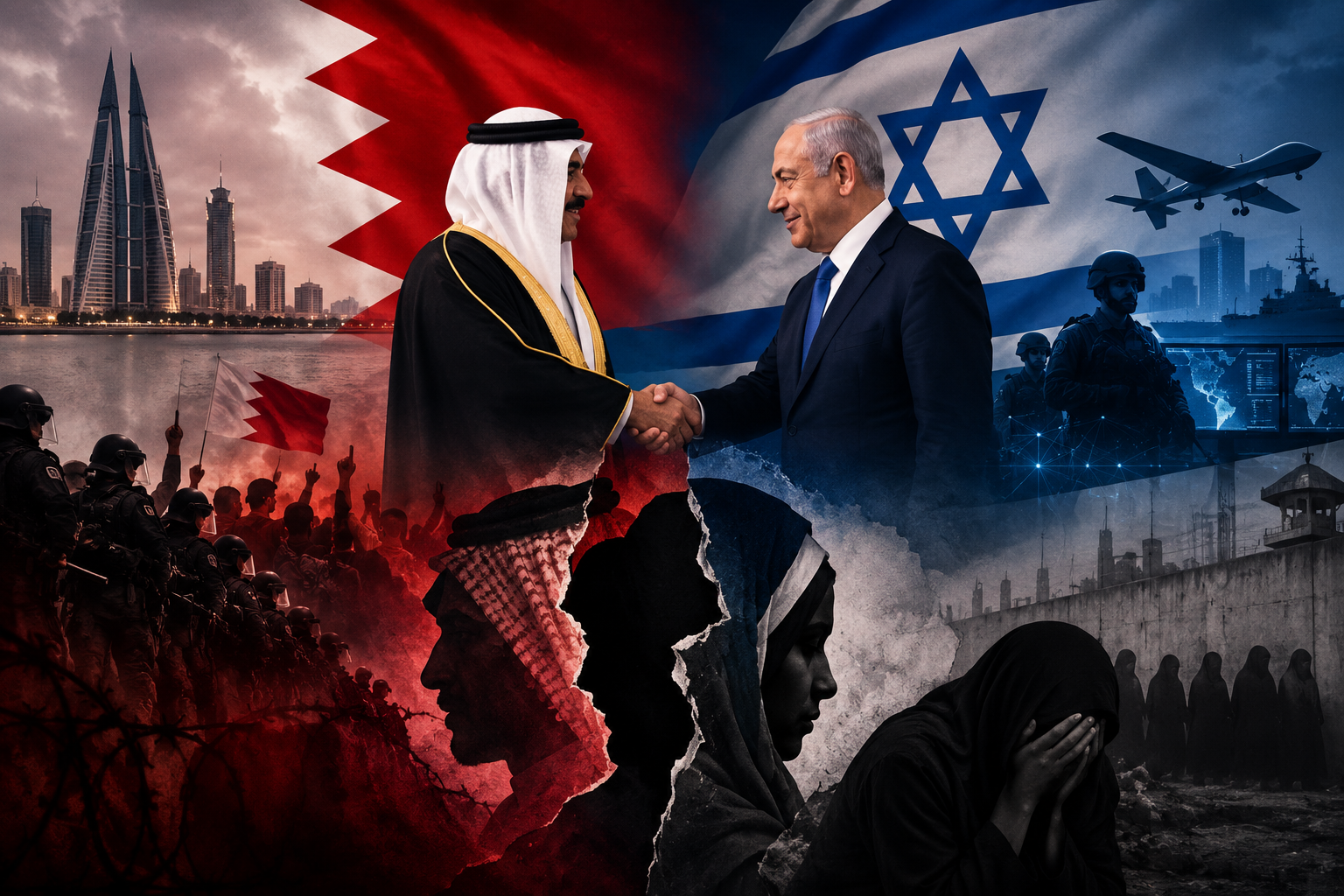
The relationship between the Al Khalifa and the Zionist entity is not confined merely to the normalization agreements of September 2020, nor does it operate exclusively according to developments in the regional situation. More importantly, as we see it, the nature and evolution of this relationship are connected to a trajectory within Bahrain rather than outside it—specifically, the erosion of the relationship between the Al Khalifa and the people as a result of authoritarianism, repression, and corrupt tribal rule, and the extent to which this erosion has developed into an advanced state of antagonism between the two sides. This has driven the Al Khalifa to pursue a policy of building compensatory external relationships, beginning with the British, as their historical principal patron, followed by the Americans, given their military power and extensive hegemony, and ultimately extending to an alliance with the Zionists.
Where does the relationship between the Al Khalifa and the Zionists stand within the broader historical and strategic network of relations and agreements with the British and the Americans?
Given the fundamental needs that the Al Khalifa seek to address, their relationship with the Zionists is of paramount importance to them, no less significant than their relationships with the British and Americans. If the so-called Comprehensive Security Integration and Prosperity Agreement (CIPA) can be described as the key to the relationship with Washington and London rather than its endpoint, then the Abraham Accords are likewise no more than the key to the relationship with the Zionist entity—a beginning rather than an end.
It can also be argued that the agreements governing relations with the Americans and British are predominantly oriented toward the military sphere, whereas the relationship with the Zionists is focused on security and intelligence. In other words, the protection of external borders and the preservation of the Al Khalifa’s hold on power are undertaken through agreements and treaties with the United Kingdom and the United States, while strategies aimed at controlling the opposition and popular mobilization fall within the framework of the partnerships between the Al Khalifa and the Zionists.
How has the rupture between the Al Khalifa and the Bahraini people led to the development of new security policies inspired by the Zionist experience?
The foregoing assessment is based not only on human-rights reports that have revealed the use of “Israeli” surveillance technologies by Al Khalifa security agencies, nor is it limited to security cooperation in its narrower sense. Rather, this relationship between the two sides emerged, as noted above, because of the collapse of the relationship between the Al Khalifa and the people and the barriers between them rising to a level of separation and hostility.
It is well known that when a regime reaches this level in its relationship with its own people, it tends to restructure its security outlook and devise ways to protect its rule, driven by an absolute perception that the continued existence of this population and its adherence to its positions—that is, its identity and fundamental values—constitute a genuine challenge. The objective then becomes to reduce that presence by every possible means and to seek to subjugate the population psychologically, culturally, and politically.
The Zionists have, in the view expressed here, made extensive advances in these areas from the Nakba of 1948 to the present day. The Zionist experience in cultural erasure, the management of repression and occupation, population displacement, psychological subjugation, and the construction of prisons and systems of siege has consequently become, in the eyes of regimes that resemble it—foremost among them the Al Khalifa regime in Bahrain—an integrated model.
Why does the relationship between the Al Khalifa and the Zionists become increasingly public as the Al Khalifa cross red lines in their war against the people?
As is well known, the Al Khalifa’s efforts to deepen their military relations with the British and Americans continue without apparent limits, as reflected in the high-level visits and meetings involving the commander of the U.S. Central Command (CENTCOM) and British military commanders, most recently the visit by the commander of the British Army’s land forces.
Yet the deeper current in this relationship is the one unfolding with the Zionists, both covertly and openly. What deserves attention here is that the extent of the secret relationship is gradually diminishing, as it increasingly comes to the surface in forms and at levels that go beyond formal normalization.
This development is linked, at a deeper level, to the Al Khalifa’s crossing of previously established taboos in their campaign against the people, particularly against Bahrain’s Shiite community, its religious scholars, and its beliefs. In other words, the Bahraini people, in terms of both their existence and their identity, are portrayed here as a common threat uniting the Al Khalifa and the Zionists.
Just as the security of the Al Khalifa is gradually destabilized by the erosion of their popular and constitutional legitimacy, the Zionist project in the region and in Bahrain likewise faces a similar challenge because of popular rejection and the values and choices held by the people that are hostile to the entity.
This, then, is how the connection between the struggle over identity in Bahrain and the Zionist project and normalization with it can be understood: insofar as this struggle is an Al Khalifa war, it is also, in this analysis, a distinctly Zionist war.