Event of the Week (Saturday, October 3, 2026): Why Was the Al Khalifa Regime’s Joining of ؟“Falcon Strike” Announced?
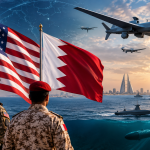
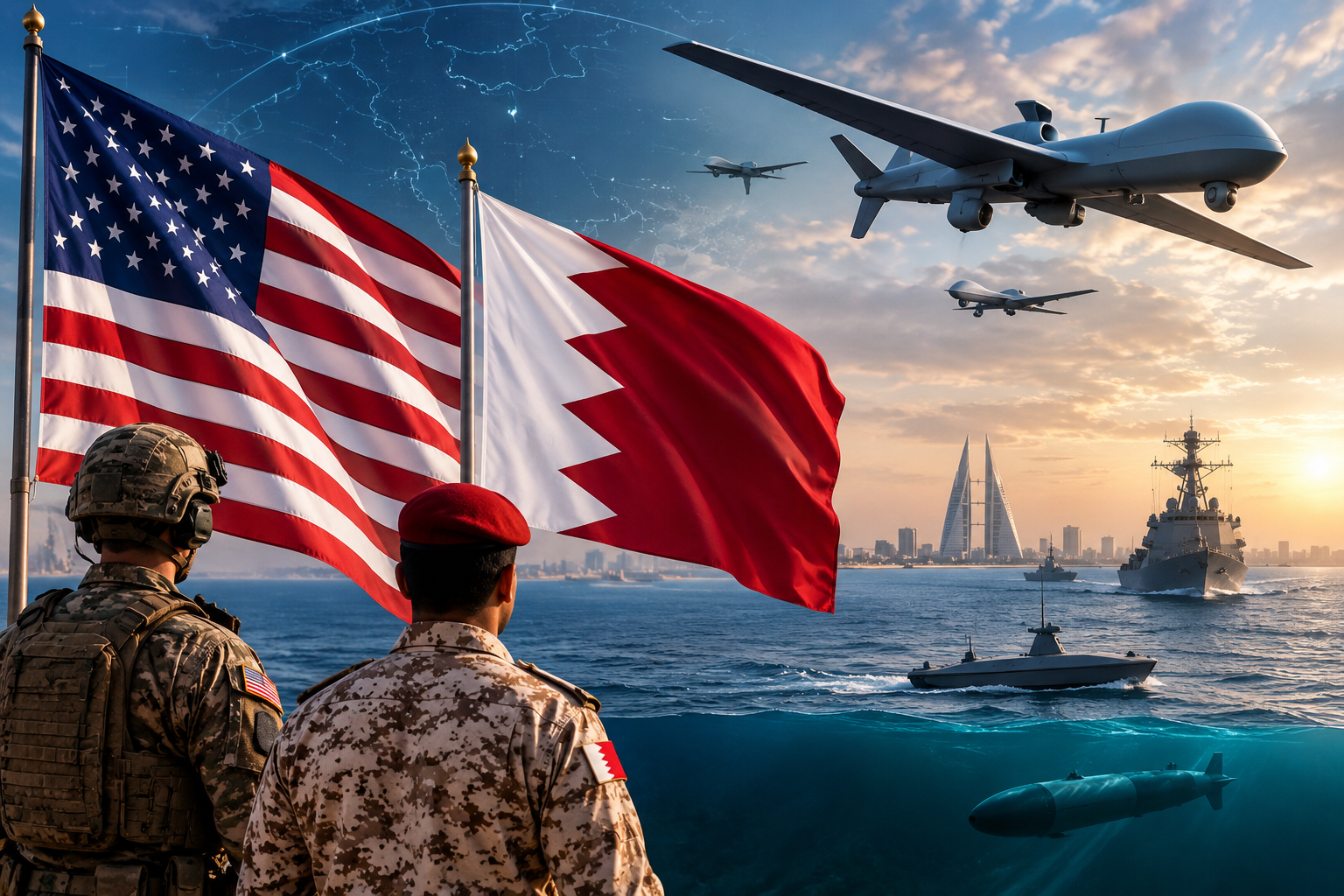
On September 30, the U.S. Central Command (CENTCOM) announced the Bahraini Al Khalifa regime’s joining of the “Falcon Strike” unit, which is made up of personnel from different nationalities and is tasked with special missions involving offensive drones.
The establishment of “Falcon Strike” was announced on August 13 as part of the systems led by Washington within the framework of the aggression against Iran and the Resistance Front. The unit is operated from MacDill Air Force Base in Florida and specializes in carrying out suicide operations using drones from the air, as well as on and under the surface of the sea. The unit includes regional and international partners and allies. However, the U.S. command does not disclose all of its participants for security and diplomatic considerations, particularly because “Israel” is part of this force and is a technical and security partner in the development of unmanned-drone systems in cooperation with CENTCOM.
The Al Khalifa, however, are among the few who have shown no embarrassment or concern about announcing their participation in this unit. Analysts interpret this as an indication that they have reached the point of “putting all their eggs in the basket of the Americans and the Zionists.”
The Maturing of the Option to Remove the Last Safety Net of the Al Khalifa Regime in Bahrain
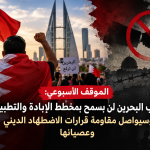
Opposition figures believe that there are two fundamental factors explaining the Al Khalifa regime’s dual aggressive conduct: one directed against the people of Bahrain, and the other against the nation’s principles in confronting the forces of occupation.
The first is the intractability of the relationship between the Al Khalifa and the Bahraini people, and the impossibility of establishing a natural bridge between the two sides. The dispute between them is no longer merely political or related to human rights; rather, it has become an existential conflict that leaves no room for half-measures.
The other factor is the failure of all the Al Khalifa’s efforts to safeguard their regime, including their dependence on the Gulf states—Saudi Arabia and the United Arab Emirates. The Al Khalifa have discovered that their repression at home and their diversification of alliances abroad have not provided their rule with security. They then came to believe that the final solution was to choose a path combining total confrontation with the people and a complete break with the nation and its causes, through full alignment under the umbrella of the Americans and the Zionists.
Analysts believe that, despite the risks, this decisive choice is useful in terms of ending the opposition forces’ hesitation in their relationship with the Al Khalifa, and in terms of providing the Resistance Front with sufficient justification to deal appropriately with the occupying entity in Bahrain. Consequently, it expands the options for removing the last safety net behind which the Al Khalifa regime seeks protection.