Political Analysis (19): The Recipe for Decline: Immersed in Illusions and Clinging to the Americans’ and Zionists’ Card — Why Are the Al Khalifa Throwing Themselves Blindly into the Burning Fires?
The Al Khalifa regime in Bahrain is becoming increasingly embroiled in the furnace of regional conflicts in a manner that raises more than one question. In this regard, the issue is not merely about the necessities that compel regimes to enter into alliances or pursue external agendas. What is particularly striking is the nature of the reasons that drive a regime that is internally unstable, and that faces dual challenges in terms of both historical legitimacy and popular acceptance, to disregard any effort to address this internal imbalance and instead deliberately deepen it through a policy of confrontation and hostility toward its own society. After all this, it proceeds — with conspicuous ferocity — to become involved in external conflict arenas, effectively leaving its regional sphere exposed to fierce winds, both visible and invisible.
If we also take into account the limited resources, the weakness of its regional political standing, and the widening security vulnerabilities, then the Al Khalifa regime, which is afflicted by all these crises and shortcomings, appears to provide a textbook case for analyzing the madness that has taken hold of it. Yet it continues to rush, like a blind man, into the midst of raging fires!
Why are the Al Khalifa throwing themselves into the furnace of regional conflicts despite the fragility of their internal position and the open possibility of suffering a dual destabilization as a result of their involvement in alliances hostile to the nation?
The importance of this question becomes clear when considering the nature of the Al Khalifa regime, which suffers from structural weakness at home. It represents an example of what are known as “guard regimes” or small rentier regimes, similar in this respect to the Jordanian regime as well.
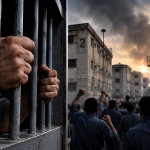
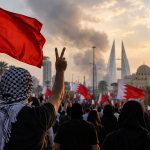
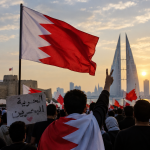
Theories of geopolitics offer a conventional answer to this question, one related to what is known as diverting attention outward. In other words, the Al Khalifa regime, deeply immersed in its internal crises and confronted with popular protest that cannot be resolved, resorts to inventing external threats and rushing toward them. This enables it to divert attention away from domestic affairs, force the internal front to become absorbed in fabricated issues concerning national security or external danger, and thereby pave the way for the intensified demonization of the popular movement and its legitimate demands, portraying them as a threat to the stability of the state and describing those behind them as traitors.
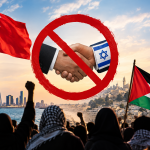
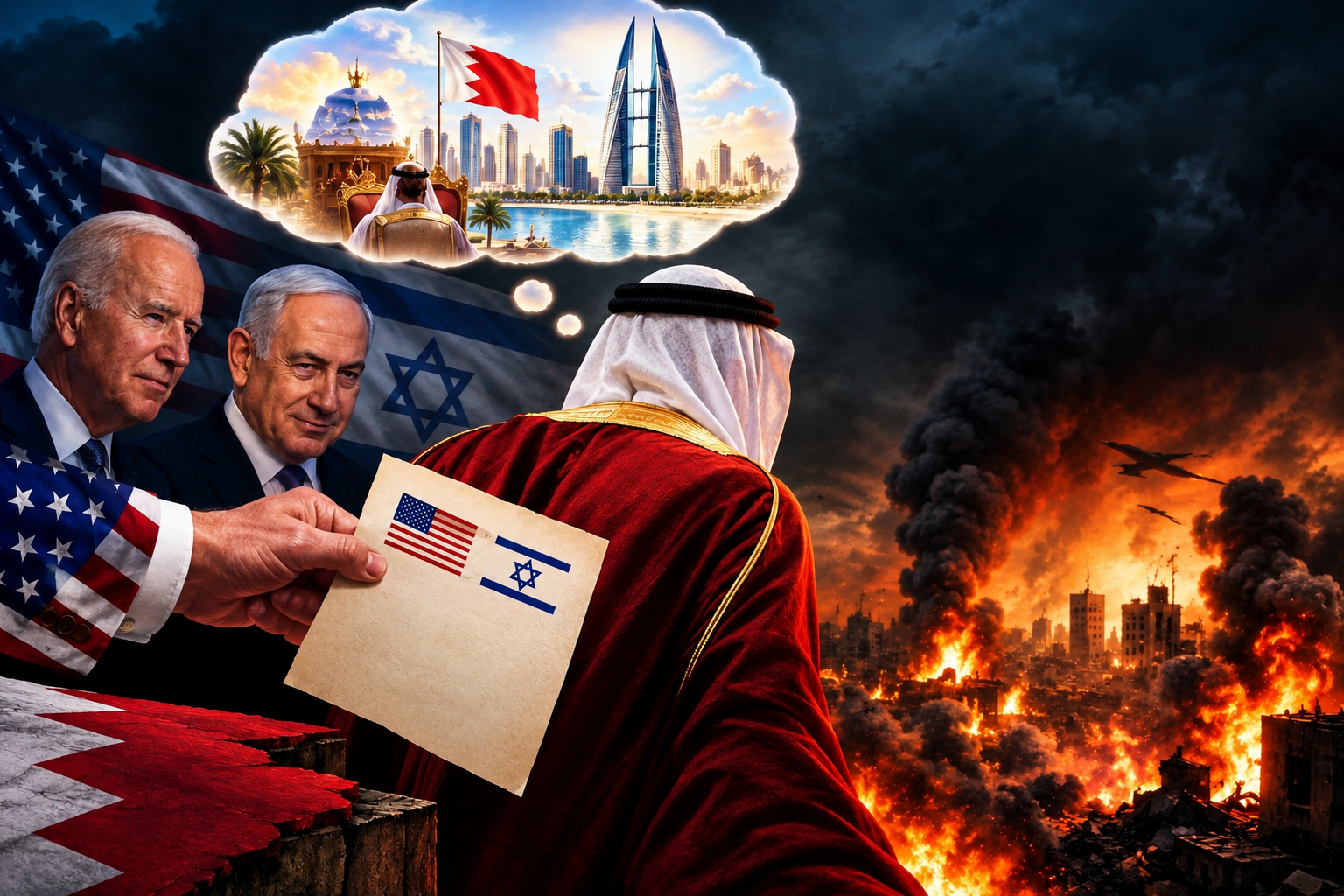
According to the official conduct of the regime, Al Khalifa policies can be understood from this perspective, particularly given their systematic record of manufacturing the “Iranian threat,” confronting Bahrain’s indigenous Shiite presence, and linking both matters to allegiance to the Americans’ and Zionists’ project of eliminating the resistance front and its liberation-oriented program.
What is the relationship between the security complex, the loss of popular legitimacy, and the Al Khalifa’s rush toward external alliances and alignment with forces of aggression?
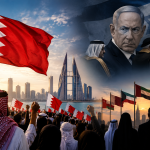
The theory of “diverting domestic attention” may be appropriate — to a considerable extent — for understanding the Al Khalifa’s involvement in the projects of aggression led by “Trump and Netanyahu.” However, there remain other gaps and crises that this theory does not adequately expose or bring to the surface.
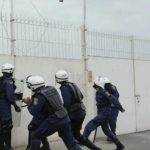
Ultimately, it is impossible to overlook the fact that the Al Khalifa’s authority in Bahrain is illegitimate, as it is an extension of a settler-colonial entity that, since its violent entry into the country in 1783, has antagonized the indigenous people. By thwarting every local popular effort to establish a modern state, the Al Khalifa have suffered from a persistent security and stability complex, which intensified to the point of relying on mercenaries and external powers to suppress what they regard as a threat from within.
Therefore, a fundamental part of the Al Khalifa’s drive toward external alliances is connected to their search for external security patronage, based on their belief that such regional alignment constitutes an insurance policy for their survival. This may provide the closest explanation for the presence of foreign military bases in Bahrain, the Al Khalifa’s participation in security alliances, and their signing of normalization agreements with the Zionists.
Why are the Al Khalifa burning their cards both domestically and internationally, preferring to retain only the card of relying on foreign powers? And how will the descent toward the slaughter unfold?
Any strategic expert would favor placing all possibilities on the table and developing an appropriate scenario and policy for each one. What the Al Khalifa are doing, however, resembles a complete immersion in a one-dimensional political fantasy and a refusal to take any other possibilities into consideration. This is a form of strategic stupidity practiced only by reckless regimes that have lost their reason and balance.
The Al Khalifa are consumed by a grand illusion: the false certainty that Iran will be defeated and that all forces and figures carrying the resistance project will be eliminated. Under the influence of this illusion, they are burning all their cards while retaining a single card that they believe to be their only lifeline and one that cannot wear out: the card of “external power” — both regional and international.
Because they are deeply immersed in this dream, and because they are overcome by the adolescent conviction that an American and Zionist victory is inevitable, they pay no attention to democratic reform or to addressing the crises at home. Instead, they see the situation as an opportunity to settle the “full account” with the people and to carry out actions that go beyond what their fathers and forefathers did — the occupiers — namely, comprehensive annihilation and openly declared ethnic cleansing.
But historical reality and the shifting currents of geopolitical reality are not a stage for illusions and daydreams. The Al Khalifa’s descent into this abyss, and their continued immersion in it, is itself the slaughter that will drive them — far sooner than anyone imagines — toward their final decline.