Political Analysis (17): The Al Khalifa and the Implementation of Blockade Sanctions Against the Islamic Republic: Bahrain’s Establishment and Its Subordination to the American Project in Confronting the Resistance Fronts
The issue of financing and economic warfare has constituted a constant theme in the external alliances linking Bahrain’s ruling establishment to American and Zionist plans, particularly those targeting the Resistance Front led by Iran. The financial dimension was not merely an expression of the strategic orientation aimed at drying up sources of funding and imposing a blockade on the resistance and its fronts. Rather, it also became a starting point for an expanding form of warfare under the banner of “counterterrorism,” encompassing financial religious obligations such as khums, zakat, alms, donations, and endowments, and classifying them as potentially criminal instruments linked to terrorism financing and money laundering. The Bahraini regime was among the early governments to become involved in this multifaceted system, whose rhythm, policies, and obligations are largely shaped and enforced by the U.S. Treasury.
In what context did Bahraini Foreign Minister Abdullatif Al Zayani’s call with U.S. Treasury Secretary Scott Bessent take place? And what is the connection between the war on the religious obligation of khums and America’s financial wars against the Resistance Front?
Foreign Minister Abdullatif Al Zayani’s call with U.S. Treasury Secretary Scott Bessent, and his support for the new sanctions against Iran, revealed a long-standing and close record of services undertaken by the Bahraini regime in the financial and economic wars waged by Washington against states, forces, and individuals it places on terrorism lists.
This trajectory went through several stages, particularly during the first five years after 2011, when the regime’s agencies began receiving practical training in implementing financial surveillance programs and policies against opponents in the context of confronting popular protests in the country. The regime did not limit itself to policies of physical and psychological repression; it also implemented a series of measures focused on cutting off sources of funding.
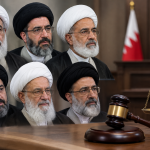
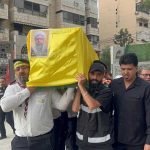
The case of Ayatollah Sheikh Isa Qassim in 2016, and the confiscation of religious funds belonging to his office, became a direct symbol of the campaign against the religious obligation of khums. The collection of religious dues was incorporated into accusations involving the unauthorized collection of funds and money laundering. At the time, the courts issued rulings ordering the confiscation of funds and properties connected to these religious dues.
How did the case of Iran’s Future Bank in Manama become an indicator of the regime’s longstanding role in implementing American policies against the Islamic Republic?
The case of Ayatollah Sheikh Isa Qassim and the campaign against the religious obligation of khums were connected to the case of Iran’s Future Bank in Manama, which exposed the longstanding role played by the regime in implementing American policies targeting Iranian assets.
The bank was closed and its funds were confiscated in a case that extended from 2015 until 2021. Bahraini court rulings resulted in prison sentences for bank officials, the imposition of substantial fines, and the confiscation of approximately $1.3 billion. Iran rejected the rulings and described them as politically motivated.
The bank’s shareholders, Bank Melli and Bank Saderat, resorted to international arbitration. The arbitration ruling, issued in November 2021, was in favor of the Iranian banks and required the Bahraini government to pay compensation exceeding €200 million. The Hague Court of Appeal rejected the regime’s attempts to annul the arbitration decision and upheld the ruling in favor of the Iranian banks.
What official system in Bahrain is responsible for managing the financial war against the opposition? And what is the role of Mai bint Mohammed Al Khalifa in implementing U.S. sanctions against Iran?
At the domestic level, there is a governmental system responsible for managing the campaign against religious funds and restricting the collection of donations. This operates within a high-level official plan aimed at cutting off all sources of financial support for the popular protest movement and tightening pressure on opposition communities in order to force them into political surrender.
In this context, the figure of Mai bint Mohammed bin Khalifa Al Khalifa stands out. She serves as Chief Executive of the National Financial Intelligence and Terrorist Financing Centre, affiliated with the Ministry of Interior. Mai—who is not the same person as Mai bint Mohammed, the former official at the Bahrain Authority for Culture and Antiquities—also chairs the committee responsible for developing policies on the prohibition and combating of money laundering.
This committee constitutes Bahrain’s highest coordinating and executive body in this field and includes representatives from the Ministries of Interior, Finance, and Industry and Commerce, as well as the Central Bank of Bahrain, the Public Prosecution, and other bodies. It is also responsible for preparing what is known as the National Strategy for Combating Money Laundering, Terrorist Financing, and Proliferation Financing.
The committee operates in accordance with international regulations and policies, including those associated with U.S.-led financial frameworks, and participates in regular regional and international meetings related to financial intelligence. These include MENAFATF, the Middle East and North Africa Financial Action Task Force, which was established in November 2004 during a meeting held in Manama. The city subsequently became the location of its permanent secretariat.
What are the shared objectives behind the regime’s financial blockade of the opposition in Bahrain? And why might the regime face consequences for its cooperation with the Americans?
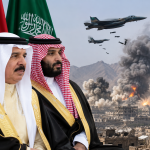
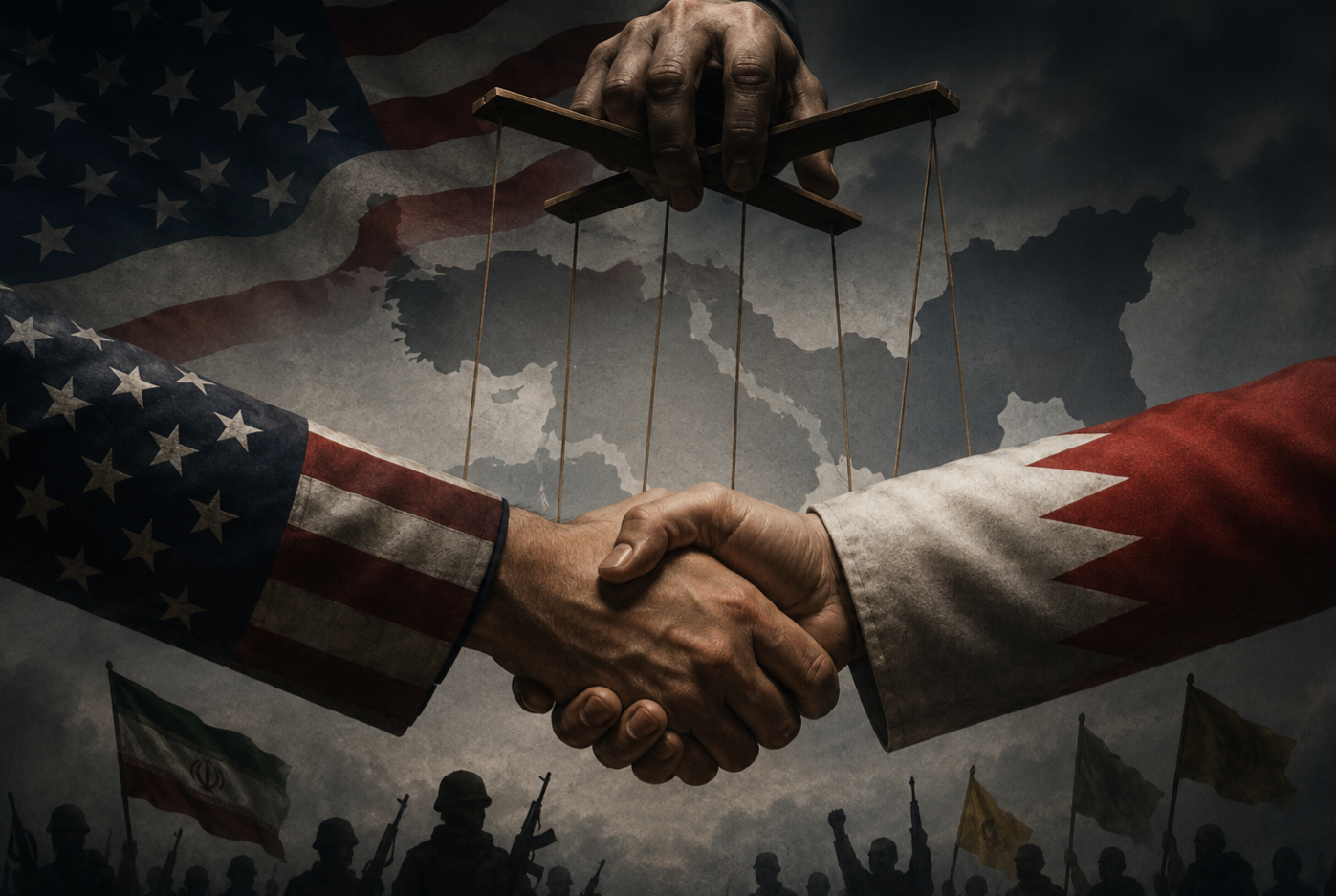
It can be argued that the financial blockade policies adopted by the Bahraini regime against the opposition emerged within a broader American and Zionist context, reflecting an intersection of shared interests—security and political—in confronting the Islamic Republic. Moreover, the alliances linking the Al Khalifa ruling family with the Americans and Zionists impose practical commitments to sanctions and financial measures targeting actors and individuals opposed to the American-Zionist project, particularly the Resistance Fronts in Lebanon, Iraq, Yemen, Bahrain, and elsewhere.
In this context, reference can be made to the so-called Comprehensive Security Integration and Prosperity Agreement signed by the regime with the United States, as well as the Tax Information Exchange Agreement and the Free Trade Agreement of 2006. The regime is also a member of MENAFATF and the Financial Action Task Force (FATF), which was established in 1989 and represents the leading intergovernmental framework responsible for combating money laundering and terrorist financing.
According to this perspective, these international frameworks reflect policies and obligations shaped significantly by U.S. financial and economic influence and impose commitments on governments around the world. Such commitments are portrayed as expressions of subordination to the American project and its broader political agenda.
From this viewpoint, resistance to this project by Iran and the broader Resistance Front is expected to include imposing significant consequences on its regional instruments and allies. In this context, the Bahraini regime is presented as one of the leading regional actors that could face the consequences of its cooperation with the United States and its policies.