Political Analysis (16): Bahrain’s Population-Engineering Project — From Foreign Communities, Naturalization, and Mercenaries to Plans to Penetrate National Identity
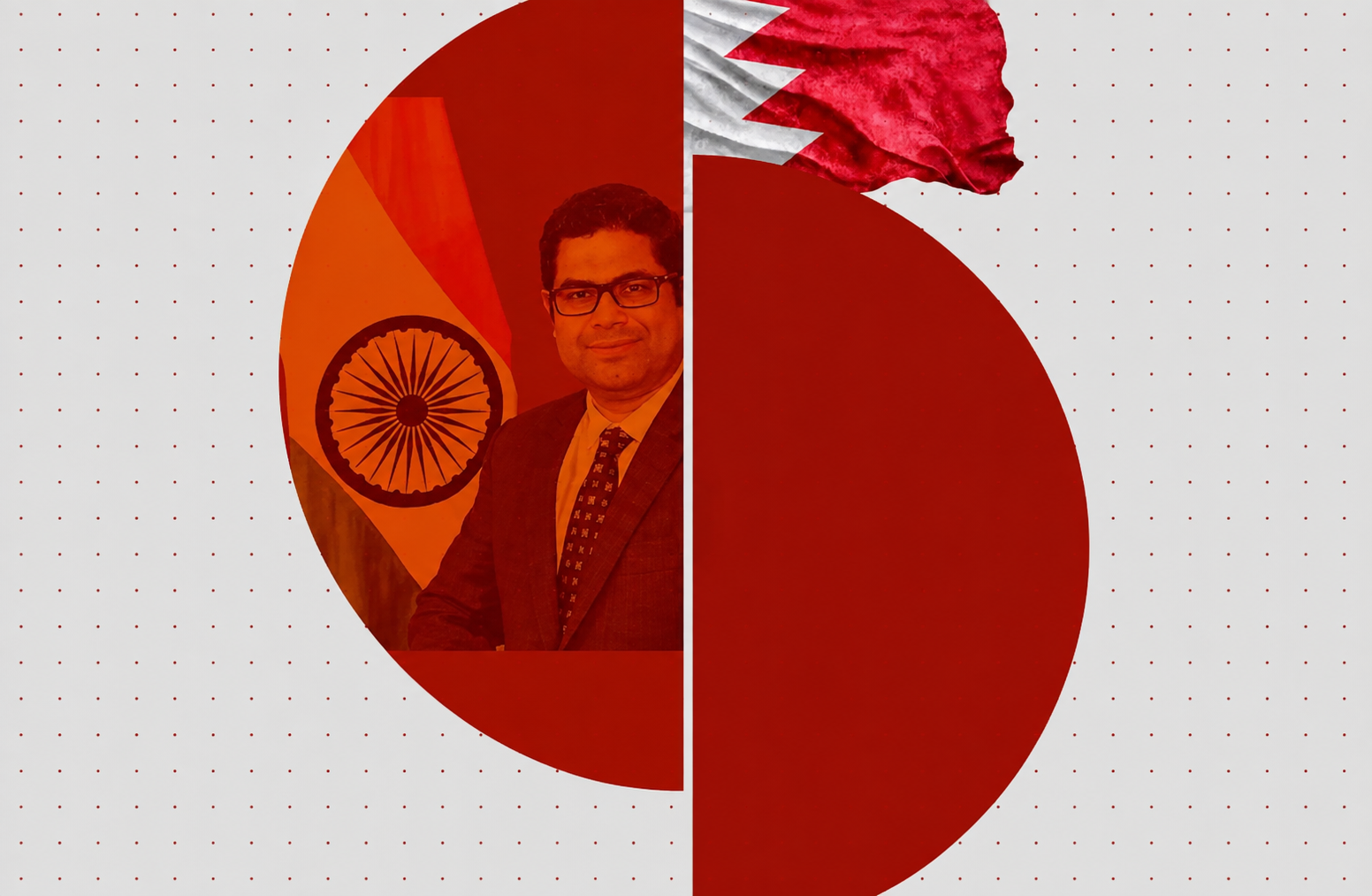
Decades ago, some people questioned any discussion of demographic change in Bahrain and the Gulf. In recent years, however, regardless of the objectives or hidden agendas involved, facts and figures have shown that the demographic composition of the Gulf has been turned upside down. This lends support to the argument that “flooding society with huge numbers of foreigners subject to the authorities’ controls will, over time, be sufficient to reshape society.” The recent statements by the Indian ambassador to Bahrain may provide a contemporary indication of this, as he confirmed that Bahrain is home to between 300,000 and 350,000 Indian expatriates—roughly equivalent to between one-quarter and one-third of the country’s total population—in a country that is small in area and has limited resources compared with neighboring Gulf states.
How did the modern features of the regime’s policies of engineering local society begin? And what new plan did the Al-Bandar Report reveal regarding demographic imbalance in Bahrain?
With regard to Bahrain, researchers are no longer hesitant to discuss systematic policies aimed at reshaping local society, based on official projects—both declared and undeclared—intended to disrupt the country’s demographic balance for both political and sectarian reasons.
For the historical record, opposition forces played a key role in 2003 in exposing some aspects of these projects, particularly the issue of naturalization. At the time, the matter became a major public issue that concerned citizens across the country. The regime, however—as was its custom—reorganized its strategy and introduced extensive new arrangements as part of its project to alter the country’s demographic structure. These included new plans aimed at penetrating indigenous communities, creating internal instability through the cultivation of infiltrators, inflaming internal divisions, and establishing parallel groups to cause confusion and sow discord.
The Al-Bandar Report, published in 2006, exposed the broad outlines of these plans, which have expanded significantly in recent years and across all levels.
In what ways did the regime benefit from foreign communities in Bahrain? And why did this become more apparent after the war imposed on Iran?
The regime benefited from foreign communities—who account for more than 50% of the population—to compensate for its profound loss of popular legitimacy. These communities played dangerous roles in sensitive events that took place in the country, and the regime also used them to confront the popular protests that erupted in 2011 and thereafter.
Perhaps the clearest example was what happened following the war imposed on Iran, when the regime directed these communities, along with naturalized citizens, to participate in organized displays of loyalty and collective-signature campaigns carried out systematically in homes, public places, and shopping malls.
As the regime became involved in the aggression against Iran and pressed relentlessly to serve the American-Zionist agenda, the Al Khalifa found themselves facing an unprecedented moment of exposure. It became clear that they stood in a position completely contrary to the popular stance. The Al Khalifa entity appeared—more clearly than ever before—to be foreign to this country and its people, with its lifelines fully connected to the foreign powers and military bases dominating the country.
Against this backdrop, the regime found itself in urgent need of manufacturing public support. Thus, it turned to the foreign communities and the large population of expatriates.
What were the main ideas emphasized by studies and research addressing demographic-change policies in Bahrain?
Numerous studies and research have emerged on the regime’s policies of demographic change in Bahrain. The American researcher Justin Gengler focused on the regime’s use of sectarian identity as a means of controlling political maps and elections and managing the balance between Sunnis and Shiites.
The French researcher Laurence Louër, meanwhile, examined in depth population policies and the social and political mechanisms involved in creating a new form of citizenship in the Gulf based on controlling demographic and sectarian balances. Along similar lines was The Sectarian Gulf by researcher Toby Matthiesen.
Earlier, Bahraini sociologist Abdulhadi Khalaf had produced research exposing the Al Khalifa’s policy of “vertical penetration” of society and the construction of an artificial form of citizenship suited to their identity as occupiers of the country.
With regard to migrant labor, Bahraini researcher Omar H. Al-Shehabi examined the concept of a “modern system of forced labor,” or the kafala sponsorship system, and discussed what he described as “truncated citizenship.” Ultimately, this results in diminishing the demographic and political weight of the indigenous population under the pretext of the market’s need for cheap labor.
The influx of foreign communities and migrant workers thus became a tool for constructing a social and consumer structure controlled by the regime, with the aim of dissolving the local identity in favor of a hybrid society lacking a cohesive set of values and entirely subject to “official” direction and an agenda connected to external projects.
Why are the views of Dr. Saeed Al-Shehabi particularly significant in the context of Bahrain’s demographic transformation?
At the immediate political level, it can be argued that the views of prominent opposition figure Dr. Saeed Al-Shehabi were among the most significant in exposing the Al Khalifa’s reliance on demographic engineering as part of a security, political, and sectarian strategy.
As early as 2002, he argued that political naturalization and flooding the country with foreign communities formed part of a project to undermine Bahrain’s demographic composition and erode the political and numerical standing of the indigenous population.
In his book Lest We Commit Suicide Twice, Al-Shehabi further argued that reliance on mercenaries to manufacture national loyalty went hand in hand with targeting the identity of the indigenous population and undermining its religious and historical foundations—something that, according to the text, was fully exposed in the campaign of persecution against the Shiites announced by “the tyrant Hamad” only a few months ago.