Political Analysis (13)
The Tyrant Drowning in the Gulf: The Predicament of Compounded Choices…
Can the Al Khalifa Reach a Lifeline Amid the Turbulent Waves?
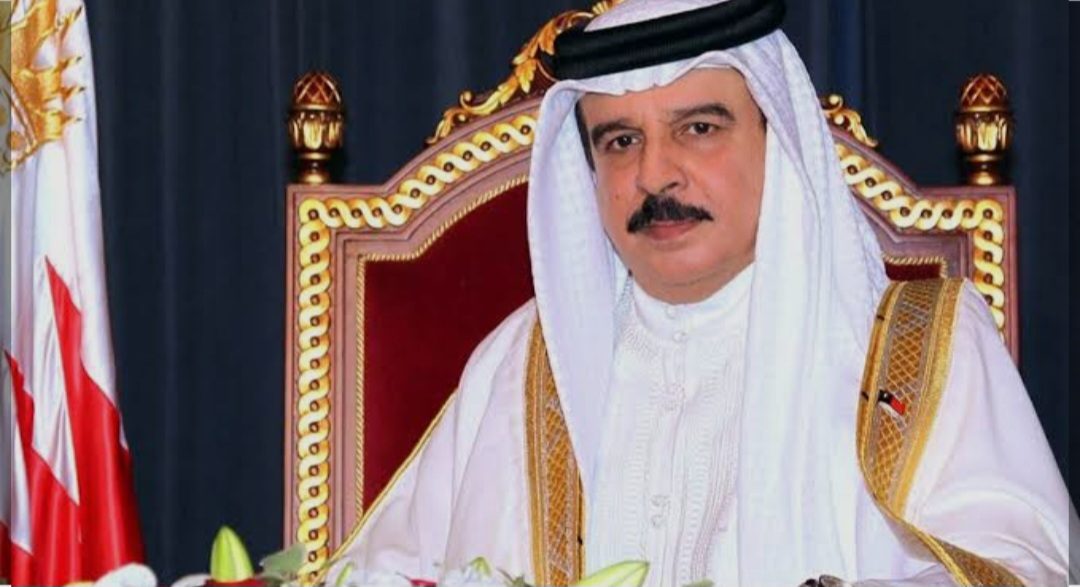
The Gulf regimes, particularly those involved in the US-Israeli aggression against Iran, realize that their fate has reached an unprecedented strategic crossroads. What places these regimes in such a difficult position is that none of the options available to them can provide a safe way out that would allow them to continue existing as they have until now. This explains their wavering between two conflicting paths: deepening their involvement in the US-Israeli alliance, while at the same time seizing any diplomatic avenue that might save them from more painful attacks should the regional confrontation intensify. The tyrant Hamad expressed this “predicament of choices” in the theatrical speech he delivered on Tuesday, July 28, revealing once again through his contradictory remarks the fate of the suffocating crisis surrounding him and his shaken regime.
What Does the Tyrant Hamad’s Celebration of a Military Exercise in Bahrain Mean While Claiming at the Same Time That Normal Life Has Returned to Bahrain?
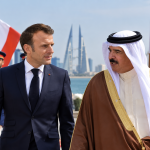
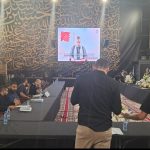
The circumstances surrounding Hamad’s speech on July 28 represent a typical example of a policy of lies and theatrics. The tyrant exploited two events to deliver a televised address, believing that it would enable him to assert his presence amid the turbulent waves blowing from the Strait of Hormuz and the Gulf coastlines.
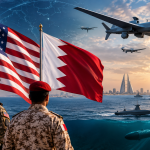
That morning, the joint military exercise entitled “Bahrain Shield” commenced and continued until the end of July. The day was also chosen for Hamad to meet with newly appointed ambassadors and deliver his speech to them in an atmosphere of subdued celebration.
The Al Khalifa have long believed that this form of diplomatic theatrics provides a suitable setting for conveying layered messages—or, more precisely, for projecting an illusion of strength as they attempt to navigate complex crises. Thus, Hamad’s speech revolved around a glaring contradiction: he spoke of the continuation of normal life in Bahrain, citing the reception of new ambassadors as evidence, while boasting before them about his regime’s leadership of a joint military exercise with the Gulf states by air, sea, and land. He spoke of being in extremely close proximity to the “front lines of confrontation,” yet at the same time did not conceal his hope that the situation would not escalate and that the circumstances would be contained “as much as possible.”
This stark contradiction embodies the confusion of Hamad and his regime, as well as their bewilderment in determining the options that might rescue them and enable them to escape the punishment that awaits them.
Why Have the Al Khalifa Fallen Into a Predicament of Compounded Choices? And Can the Regime Reduce the Scale of the Risks Facing It by Allying Itself With All the Nation’s Enemies and Providing Services to Them?
The tyrant Hamad chose to climb aboard every vessel that might offer him a chance of escaping drowning, particularly following the US-Israeli aggression against the Islamic Republic.
Perhaps the key to understanding this situation lies in pointing to the compounded crises in which Hamad and his regime became entangled—or which they themselves caused—following the war during the past Ramadan.
The primary manifestation of this is the Al Khalifa’s involvement in a dual aggression, both inside Bahrain and beyond its borders. On the one hand, there is the open aggression against Bahrain’s Shiites; on the other, there is participation in the aggressive war against Iran.
Naturally, the two wars are interconnected. Yet the scale of the Al Khalifa’s involvement in both places Hamad in the position of a drowning man caught amid fierce winds, forced to reach out to any vessel passing by and entice it to throw him a lifeline.
It is well known that all the vessels surrounding the Al Khalifa regime—and the other Gulf regimes—are steered according to the US-Israeli agenda. They begin with the vessel of American bases and interests, and the vessel of subordination to the Al Saud, Al Nahyan, and Al Sabah; then pass through the vessel of the Zionists and absolute alignment with them; and end with the vessel of the takfirists led by “al-Julani.”
The question the Al Khalifa evade is this: Who will save these vessels from the flames and storms so that they can serve as vessels of safety for others?