Article: Is the United States pulling the rug out from under the Khalifa regime?
The U.S. Ambassador to Bahrain, Stephanie Hallett, who presented her credentials to Foreign Minister Abdullatif Al-Zayani less than four months ago, and who is well acquainted with Bahrain’s political landscape—having previously been involved during her earlier work at the U.S. embassy in Manama in projects aimed at undermining the opposition before moving to the staff of the U.S. embassy in occupied Jerusalem—has returned to the regional political scene with statements carrying multiple dimensions.
In a statement issued on April 15, 2026, Hallett said: “We are here, we have been here, and we will remain here.” Three brief phrases that contain three detailed messages, according to observers of regional affairs and the repercussions of U.S.–Khalifa relations since the beginning of the U.S.-Zionist aggression against the Republic and up to the period following the ceasefire that the “axis of evil” and its Gulf regime allies were forced into.
During the war, the Khalifa regime was surprised that its American ally—who had always promised to protect it from any “external aggression”—failed to do so. Moreover, its “advanced” defense systems failed to protect its bases and operations centers in Bahrain, as well as the regime’s bases and civilian facilities, which the Americans were compelled to resort to after losing their own bases to Iranian strikes. In addition, the Bahraini population was exposed to danger due to failed missiles that fell on citizens’ homes, resulting in heavy economic losses.
What reinforced the regime’s sense of betrayal was revealed by the American newspaper Politico, which reported—citing U.S. diplomatic cables—that the regional war led to the emergence of general impressions that the United States had abandoned Bahrain and its Gulf allies in favor of protecting the security of the Zionist entity. This, in turn, threatens long-term political and security relations. The cables also included accounts indicating that the American military presence had effectively turned Bahrain into a target, according to the diplomatic document sent from the U.S. embassy in the capital, Manama.
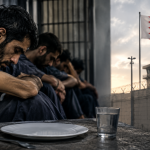
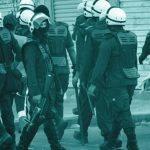
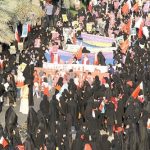
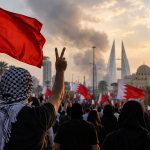
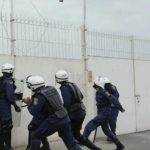
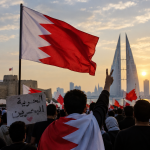
Of course, this is not the first time that the U.S. administration has disregarded its allies. This is well understood by the Bahraini people, who have insisted on their rejection of the presence of U.S. military bases in their country and have paid a heavy price for that stance. Hundreds have been arrested, accused of treason, and threatened with the revocation of their citizenship. This retaliation against the population may reflect the regime’s realization that the people’s position opposing its decisions is correct, leaving it feeling powerless and disgraced, and prompting it to adopt repression as a means to alleviate that sense of shame.
The newspaper stated that official media in Bahrain focused on the actions of the Khalifa military in intercepting Iranian aircraft and missiles, while omitting mention of “American support.” Official statements from the regime’s government also did not acknowledge the equipment and training provided by the United States to Bahrain’s armed forces. It suggested that this omission may stem from a desire to protect the operational security of American personnel and equipment, while the active presence of the British embassy on social media created an impression that the United Kingdom was advancing while the United States was retreating—according to the American newspaper.
However, according to analysts, the Khalifa regime sought to assert its presence independently of the Americans. As soon as the dust settled from one of the harshest rounds of confrontation between the Republic and the axis of resistance on one side, and the United States, the Zionists, and their “allies” on the other, the regime’s media and its aligned commentators rushed to speak of achieving “victory” over the Islamic Republic—constituting an official acknowledgment of its participation in the aggression as an attacker, not merely in defense or neutrality.
In a related context, the Khalifa regime—finding itself deeply entangled in this war against the Republic—sought to achieve an accomplishment that might elevate its political standing. It submitted a draft resolution to the United Nations Security Council on April 7, 2026, aimed at securing navigation in the Strait of Hormuz. However, the proposal was rejected due to the use of the veto by Russia and China.
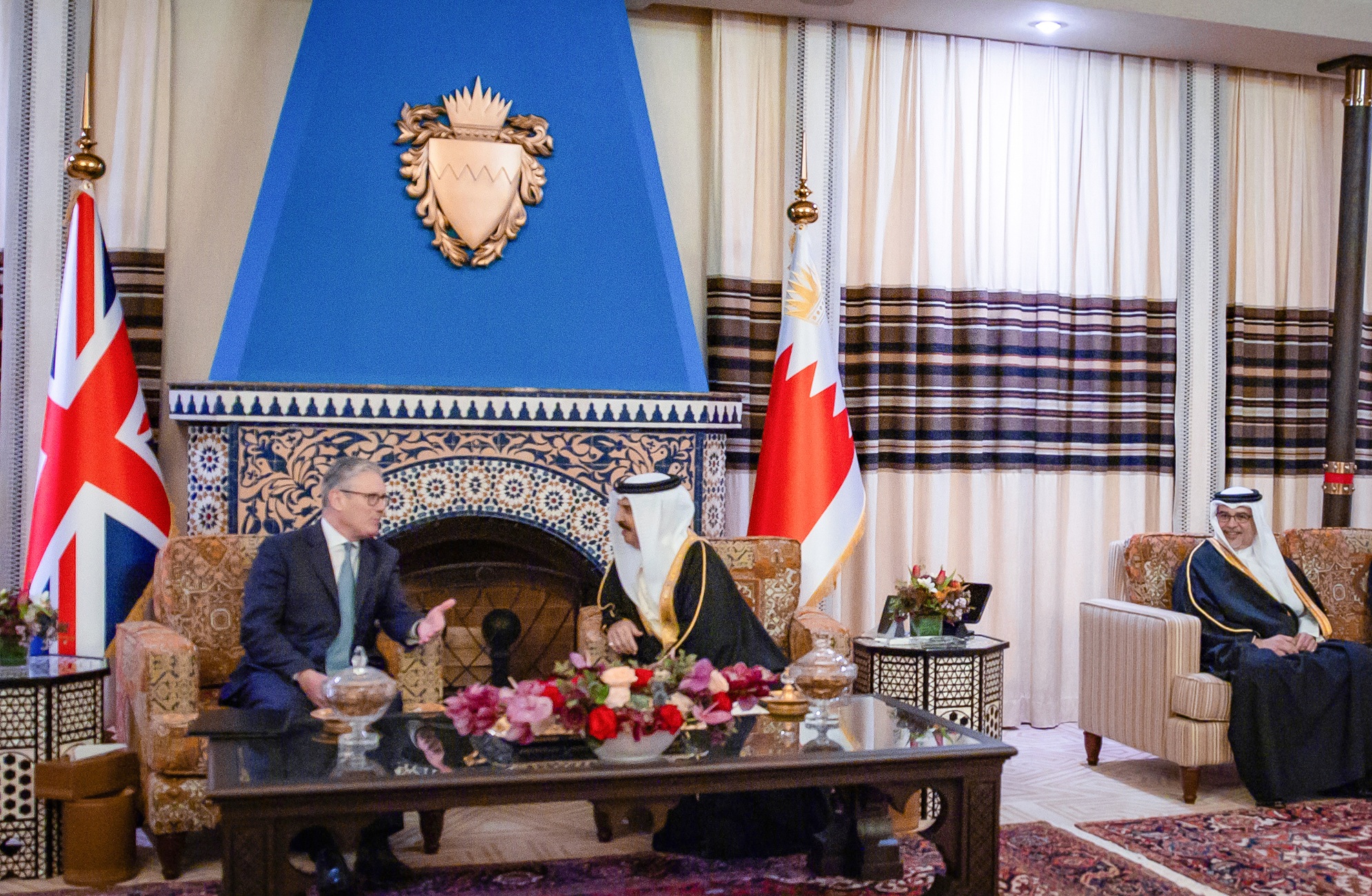
In light of all this, the regime needed an alternative plan to preserve its image and ensure its survival. It thus exploited the need of its former British ally to restore its influence in the Gulf region, particularly Bahrain—especially amid increasing tensions between the Trump administration’s handling of the war and the hesitant stance of European countries toward full involvement. This led to the decision to conclude a military deal between the British company “Cambridge Aerospace” and Gulf states, including the supply of “Sky Hammer” interceptor missiles and launch systems, as revealed by British Defense Secretary John Healey.
The first deliveries of the large batch of missiles and launchers are scheduled to begin in May, with supply operations continuing over the first six months following the signing of the agreement, which is worth millions of pounds. The deal includes technical integration services and training for end users. This military agreement comes after the failure of the U.S. “Patriot” defense system—stationed in Bahrain and several Gulf countries—to intercept hundreds of Iranian drones, resulting in multiple explosions across the region since the beginning of the U.S.-Zionist aggression against the Islamic Republic of Iran on February 28, 2026.
Therefore, it is no coincidence that the United States chose Bahrain as one of the key stops in the tour of the commander of the U.S. Central Command (CENTCOM), Brad Cooper. His visit carried multiple dimensions, with both apparent objectives and hidden implications. He praised what he described as the strongest military partnership “ever,” and highlighted the role of the ruler Hamad bin Isa Al Khalifa, his son Salman, and several Gulf states in the U.S.-Zionist war against the Islamic Republic of Iran.
Addressing journalists, he said: “To give you an idea of their contribution and impact, the King of Bahrain and the Crown Prince knew our soldiers personally by name, and these two leaders expressed their appreciation for U.S. armed forces personnel, who continue to stand side by side with our partners in support of regional defense.” He added: “Bahrain, the UAE, Saudi Arabia, Qatar, Kuwait, and Jordan have been exceptional allies. I had the opportunity to meet their senior leadership and soldiers. They were equally inspiring and committed to collective defense, defending Americans and their own countries. It is truly inspiring.”
Political analysts believe that this statement carries an implicit threat: “If we sink in the region, you will sink with us.” The United States, they argue, has never been one to preserve submissive loyalty; rather, it is driven by its own interests and the security of the Zionist entity.
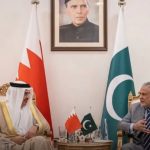
For her part, Ambassador Hallett visited Foreign Minister Abdullatif Al-Zayani and affirmed the depth of the historical relations and strategic partnership between Bahrain and the “friendly” United States, noting the noticeable progress and growth across various fields. They exchanged views on regional developments, current conditions and their implications for regional security and the global economy, and discussed prospects for cooperation and coordination regarding regional issues presented before the Security Council—thereby reinforcing her statement: “We are here, we have been here, and we will remain here.” This, according to the February 14 Youth Coalition, reflects the view that the U.S. administration treats Bahrain as a sphere of influence rather than a sovereign state.
So, the question remains: Has the United States, in recent weeks, allowed the Khalifa regime a small space to maneuver among major powers, only to once again pull the rug out from under it and tighten its grip?