Political Analysis (11): What Has Driven the Bull in the Palaces of Al Khalifa into a Frenzy? Torturing Religious Scholars and Assaulting Religious Rituals: The Tyrant’s Path to the Abyss
The Al Khalifa regime does not appear, even now, to be fully aware of the nature of the dangers surrounding it—and, indeed, surrounding the American-backed Gulf entities as a whole. Every assessment places the Al Khalifa regime in the red zone, given the strategic challenges closing in on it and creating the ideal conditions for the downfall of any regime that insists on violating every moral principle, legal norm, and constitutional standard.
What, then, makes the tyrant Hamad appear so confident amid these blazing fires?
Certainly, the arrogance and brutality displayed by the tyrant and his entourage do not reflect confidence or genuine composure. Nor do they indicate that they possess a clear understanding of the rapidly unfolding realities around them. This is particularly evident when the tyrant and those around him decide—at such a complex wartime moment—to open a new front against the overwhelming majority of the Bahraini people, targeting their religious rituals, identity, and very existence through methods of repression and eradication that, in some respects, surpass even those employed by the Zionist entity.
Why does the Al Khalifa regime deliberately close its eyes to the fires raging around it, fires that may soon encircle the tyrant within his palaces and fortified underground bunkers?
Illegitimate regimes—those that lack both popular and constitutional legitimacy—often come to believe that they are fighting their final battles when they sense that they have reached the natural limits of their survival and that the tide which once carried them has begun to break against the rocks. In such moments, driven by desperation, these regimes cease to recognize prohibitions or moral boundaries. They cross every red line without any awareness of the consequences of their crimes. This is not because they ever truly respected those limits or adhered to ethical and religious principles; rather, under normal circumstances, maintaining a minimum appearance of compliance helps them project the image of a modern state and conceal their deep structural defects and inherent contradictions.
Yet when an authoritarian regime finds itself facing a stark choice—either to unleash every instrument of savagery in order to preserve its grip on power or to maintain balance by managing challenges with restraint and diplomacy—it does not hesitate to embrace the first option and pursue it to its furthest extreme. Brutality and frenzy cloud both vision and judgment. Thus, the principal reason driving the Al Khalifa rulers to throw themselves into the fire is that savagery itself has come to dominate them. It is no longer merely a tool for imposing domination and subjugation; once brutality becomes an ingrained characteristic of a regime, it transforms into a deadly poison that ultimately destroys the regime itself.What Triggered the Frenzy of the Bull in the Palaces of Al Khalifa? How Did the Regime’s Fear Grow That Popular Rejection of the War Would Evolve into a Mass Uprising Similar to the 2011 Revolution?
When the war of aggression against the Islamic Republic began, followed by Iran’s resilience and deterrent strikes against U.S. military bases across the region, the Al Khalifa rulers initially assumed that the Bahraini people would eventually be compelled to align themselves with the regime’s policies and propaganda. Instead, they were confronted with a reality entirely different from what they had anticipated: the people refused to endorse the war against Iran, chose to stand alongside the Islamic Republic in the face of the aggression, and rejected the continued presence of the military bases participating in that war.
From the very first hours of the conflict, the people expressed this position with complete clarity. That stance deeply unsettled the Al Khalifa regime and intensified its growing fear that public opposition to the war on Iran might develop into a broader popular movement resembling the February 14 Revolution—or even surpassing the scale and momentum of the 2011 uprising.
This anxiety was further reinforced by the fact that none of the country’s social groups, religious authorities, or national political forces issued statements flattering the regime or lending credibility to its narrative regarding its participation in the war against Iran. On the contrary, public sentiment became increasingly consolidated as people openly declared their support for Iran and its resistance, reaffirmed their long-standing demand for the removal of American military bases from Bahrain, and continued to regard those bases as instruments of colonial domination and military aggression.
It was precisely this development that drove Hamad into a state of fury and caused him to lose all restraint, ultimately granting what the article describes as the most dangerous green light yet for launching a campaign of persecution against the Shi’a community, extending even to the targeting of its most senior religious scholars.
Does the Torture of Detained Religious Scholars Reflect the Tyrant’s Blind Rage, or Is Such Brutality Simply an Expression of His Criminal Origins?
Since the beginning of his rule, King Hamad has, according to the article, committed some of the gravest violations and abuses. At no point, it argues, did the Bahraini people feel that his reign differed in substance from the dark periods that preceded it, despite repeated official promises of reform and political openness.
During the first decade of Hamad’s rule, particularly following the publication of the Bandargate Report (2006), what the article characterizes as a long-standing project inherited from his forefathers became increasingly apparent: a project aimed at undermining the indigenous population by weakening its religious identity and sources of spiritual strength while altering Bahrain’s demographic composition through extensive political naturalization of sectarian loyalists.
According to the article, the second decade of Hamad’s rule—especially after the 2011 uprising—demonstrated that the violence embedded within the Al Khalifa establishment knew virtually no limits, and that every reprehensible act became permissible so long as it served the preservation of authoritarian rule and corruption.
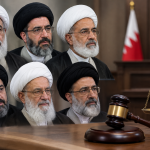
Even so, many observers, the article argues, could scarcely have imagined the extent to which the regime would proceed in its campaign against religious rituals, the criminalization of religious obligations, and the persecution of Bahrain’s most senior religious scholars—particularly the events witnessed in recent days involving the detention of prominent clerics following the outbreak of the war against the Islamic Republic, accompanied by allegations linking them to the Islamic Revolutionary Guard Corps (IRGC) and to the doctrine of Wilayat al-Faqih.
For many, the article continues, the reports describing the physical and psychological abuse inflicted upon the detained scholars, together with the assaults on their dignity, religious standing, and personal integrity, have been profoundly shocking. Yet, viewed within the broader historical context of the Al Khalifa family’s record—characterized in the article by successive episodes of forced displacement, abduction, killing, and other grave abuses—such conduct becomes, in the author’s view, consistent with the historical pattern of a ruling family that has maintained its authority through coercion while suppressing the indigenous population and treating the preservation of its rule as a matter of existential survival.Will This Blind Frenzy Save Al Khalifa from Falling into the Pit and the Flames Within It? And When Will the Story of Two and a Half Centuries of Darkness and Crimes in Bahrain Come to an End?
There is no doubt, the article argues, that the raging Al Khalifa bull understands that excessive fury and reckless destruction will not save it from the flames that are gradually consuming its tail. What this bull is doing is nothing more than an act of revengeful aggression, driven simultaneously by rage and fear.
This is not merely a symbolic description or an imagined portrayal of the reality of those who govern Bahrain under Al Khalifa rule. Rather, the irrational conduct displayed by the Al Khalifa family, particularly by Hamad himself, reflects nothing but blind fury—one that prevents its holder from seeing the realities and facts surrounding him. Instead, he becomes unconsciously controlled by the influence of the “cloth” being waved before him in the arena of conflict, without stopping to consider whether that cloth is worn out, or merely a deceptive and dangerous instrument designed to lure him into a trap or lead him toward walls harder than his own twisted horns.
By measuring the developments taking place in the region, considering the new equations created by the resistance front led by the Islamic Republic, and observing the fractures and setbacks affecting the greatest colonial power represented by the United States, one can assess the decline that awaits Al Khalifa—rapidly and in an unprecedented manner, according to the article.
In the current circumstances, no oppressive or criminal power can feel completely secure from accountability and decisive consequences. This is not because a just international system exists, but because the mechanisms of accountability have become stronger and more influential due to what the article describes as the success of the “front of truth” in consolidating its foundations, demonstrating its strength and resistance, and proving that its rise is no longer merely an idealistic concept or a collection of slogans that inspire the hopes of the oppressed and those seeking liberation.
Rather, the article states that this front has achieved strategic and moral advancement through resistance, becoming an actual and established force on the ground.
Under such circumstances, the article argues, the closest expected outcome is the collapse of fragile entities—those that conceal their weakness through wrongdoing, hostile rhetoric, and misguided choices.
At the top of this list, it claims, stands the “Al Khalifa entity.”