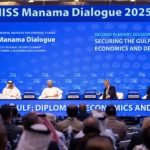
Event of the Week (Saturday, 31 October 2026): The Manama Dialogue – A Platform at the Service of Foreign Powers
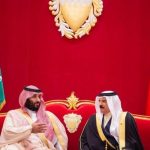
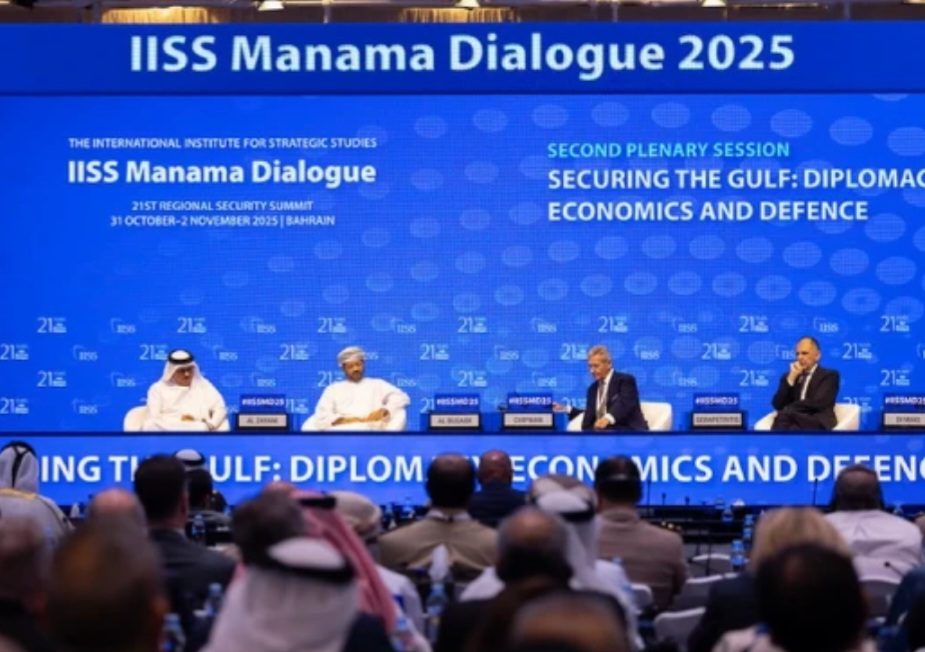
The proceedings of what is known as the “Manama Dialogue” commenced on Friday, 30 October 2026. This year’s event was held under the title “Regional Security Summit”, against the backdrop of the repercussions of the war on Iran and the unprecedented breakdown that followed in the Gulf security doctrine under the umbrella of foreign powers.
Multiple sources confirmed that the Khalifa regime, in coordination with the forum’s organising body, the London-based International Institute for Strategic Studies (IISS), had insisted that the list of participants in this year’s Manama Dialogue not be made public. This fuelled reports suggesting the participation of Israeli officials specialising in security and intelligence affairs.
The regime routinely conceals the identities of participants and delegations from Israel in particular, citing security concerns and seeking to avoid protests and political pressure coinciding with the forum, which brings together numerous international delegations.
Among the participants are representatives of the American Jewish Committee (AJC), an organisation that wields influence within the Zionist entity.
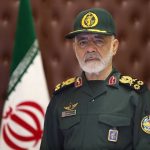
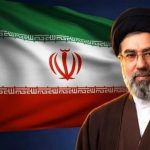
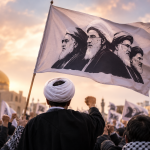
Sources also confirmed that the forum would not witness the participation of any official or semi-official Iranian representation. This is despite attempts by the Khalifa regime to extend invitations to Iranian academics and former officials. Tehran, however, continues to keep its doors closed to the Al Khalifa family, maintaining its position that repression and persecution of Bahrain’s Shia population must end before diplomatic relations between the two sides can be restored.
Security Issues Amid the Collapse of the Gulf Security System
The Manama Dialogue falls within the framework of Khalifa diplomacy, which has been shaped in recent years, particularly as the regime has struggled to rebuild sound relations both domestically and internationally.
The contours of this diplomatic approach have gradually emerged against the backdrop of regional tensions and shifting power dynamics, as well as changes in the balance of forces that had previously defined the regional conflict.
In an effort to provide the regime with a diversified security network, Al Khalifa diplomacy has sought to combine two approaches: diversifying security and defence partnerships, and pursuing external propaganda and diplomatic promotion. The latter is intended to whitewash the regime’s reputation and secure its acceptance within the various waves of regional alliances.
Furthermore, this forum forms part of the planning undertaken by foreign experts associated with Western projects in the Gulf, in ways that serve the agendas of hegemonic powers, particularly the United States and Britain.
This is reflected in the forum’s chosen themes and its emphasis on security issues, defence matters and arms procurement, under the supervision and selection of decision-making circles in the capitals of the global powers