Article: Reading the “Speech of the Chairman of the Shura Council in the February 14 Youth Coalition”: Analysis and Implications in an Escalating National and Regional Context
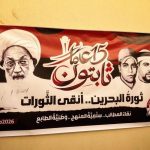
The Chairman of the Shura Council in the February 14 Youth Coalition delivered his annual speech on February 18, 2026, on the occasion of the arrival of the blessed month of Ramadan for the year 1447 AH. His message was multidimensional, combining religious spirituality with political awareness, and invoking Quranic values of resistance through rejecting foreign military presence in Bahrain.
This speech comes at an extremely sensitive time, as the region is witnessing dangerous escalation that threatens to ignite a comprehensive regional war. This timing gives his words meanings that go beyond the religious season, extending into anticipating national risks and mobilizing efforts to confront them.
First: Religious framing as an entry point to identity and resistance
The Chairman began his speech by affirming the significance of Ramadan as a time devoted to the Quran and the purification of the soul. He then moved to transform this occasion into a starting point for reinforcing identity. The emphasis on Ramadan gatherings focused on the Quran and the biography of the Prophet’s Household comes within the context of consolidating a societal culture that revives values and protects youth from what he described as “deviant Western ideas.” This connection between religious rituals and cultural resistance represents a clear strategy: preserving collective awareness in the face of cultural alienation and dependency.
Second: Redefining resistance from a Quranic perspective
One of the most significant aspects of the third paragraph of the speech was the expansion of the concept of resistance to include ethical and behavioral dimensions. Resistance is not limited to carrying weapons, but begins with resisting personal desires and impulses, as exemplified in fasting, and extends to resisting injustice through words and steadfastness on principles. This was supported by reference to a Quranic verse meaning: do not obey the disbelievers and strive against them with it through great striving. This interpretation establishes a comprehensive vision: struggle is carried out through the Quran itself, meaning through argument, guidance, and method, before any other means.
This perspective aligns with the peaceful nature of the February 14 uprising, which made words and principled positions its primary tools in confronting the ruling authority. Moreover, emphasizing the example of prophets and divinely guided leaders in resisting tyranny grants this concept historical and religious legitimacy, transforming collective patience into a genuine act of resistance.
Third: Strengthening social spirit as the foundation of cohesion
The speech emphasized in its fourth paragraph the values of solidarity and social responsibility. This constitutes an indirect call to repair divisions and strengthen internal unity at a time when pressures are intensifying. The call for communal iftar meals and participation in religious gatherings is not merely charitable activity, but a process of reconstructing the social fabric, whose foundations have been shaken by sectarian and repressive policies. A cohesive society alone is capable of enduring in the face of external pressures and projects.
Fourth: The position on the American base as a message of sovereignty and a warning of existential danger
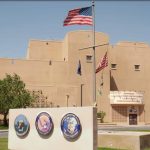
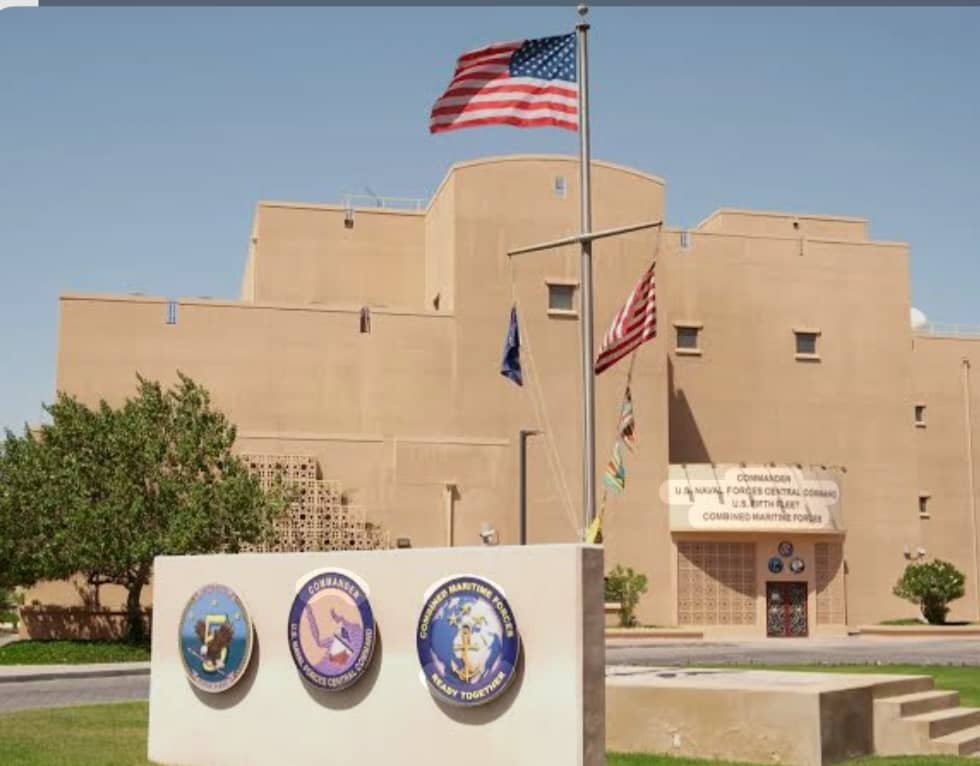
The fifth paragraph was the most explicit in its political content. The Chairman renewed his categorical rejection of the American military base on Bahraini territory, considering it a violation of sovereignty and a security threat that places Bahrain within the circle of direct targeting. This warning comes within the context of a tense regional environment marked by repeated American threats against Iran and the possibility of a wide war that would make the Fifth Fleet base in Juffair a primary military target.
Here, the speech strips the American presence of its characterization as an ally and presents it instead as an instrument of pressure used by Washington, drawing Bahrain into conflicts unrelated to its national interests. The call to resist this presence through all available means opens the door to various forms of popular rejection, especially in light of the ruling authority’s inability to protect the country.
Fifth: Timing implications and reference to the regional conflict
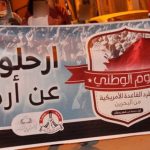
Although the speech did not mention Iran explicitly, the timing of commemorating the “National Day for the Expulsion of the American Base from Bahrain” alongside American escalation against it places the popular Bahraini position objectively aligned with Tehran. Rejecting American bases implicitly means rejecting tools of pressure directed against Iran. Furthermore, emphasizing that Bahrain’s true security is achieved through justice and peaceful coexistence with its regional environment clearly signals the need to build relations based on mutual interests rather than hostile alignments.
In this way, the February 14 Coalition positions itself alongside forces that reject American dominance in the region, with Iran at the forefront.
Conclusion: A speech that goes beyond the religious season toward strategic direction
The speech of the Chairman of the Shura Council in the February 14 Youth Coalition can be read as a comprehensive political document that uses the religious occasion to deliver major national and regional messages. On one hand, it establishes a resistance-oriented consciousness rooted in religious and moral principles. On the other hand, it warns of the security risks caused by American military bases and calls for popular mobilization to protect the country.
At a time when tensions are expanding, this speech serves as both a warning signal and a guiding reference for the people of Bahrain, emphasizing that true sovereignty begins with ending foreign military presence and preparing to confront potential dangers that could affect the entire nation.