Political Analysis (24): Saudi Attack on the Tyrant Hamad — Al Khalifa Caught Between Two Acts of Political Suicide: The Al Saud’s Unrestrained Fury and Bin Zayed’s Blackmail
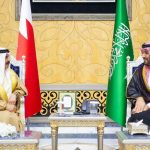
In his speech marking the opening of Bahrain’s largely symbolic parliament, the tyrant Hamad extended “special thanks” to the Emirati entity, singling it out from the other Gulf entities, including the Saudi entity. Was this an unintentional mistake, or a deliberate departure from the “script”?
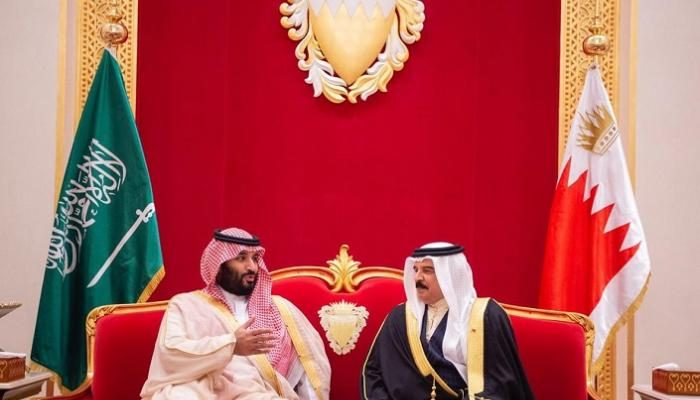
To begin with, it is more likely that the tyrant Hamad’s speeches—particularly following the aggression against Iran—have been systematically crafted under the direct supervision of the Royal Court. Over the past few months, there has been a notable fluctuation in the tyrant’s visits to Gulf countries, accompanied by a gradual cooling of relations between Al Khalifa and Al Saud. This has unfolded alongside the conspicuous discord between the Saudis and the Emiratis, which has been clearly expressed through mutual attacks, particularly those conducted by their respective electronic armies.
Amid these attacks, Al Khalifa chose to position themselves alongside “Mohammed bin Zayed,” yet at the same time, they did not dare to antagonize “Mohammed bin Salman.” So, what has changed over the past few months?
Why Did Saudi Electronic Trolls Launch a Campaign Against the Tyrant Hamad After He Thanked the UAE
Saudi electronic trolls launched a targeted campaign against the tyrant Hamad as soon as a clip of his speech, in which he singled out the UAE and Mohammed bin Zayed for thanks, began circulating.
It is no secret that Saudi agencies have extensive experience in waging organized cyber campaigns and directly directing social media accounts to serve specific objectives. However, the intensity of the attacks against the tyrant escalated after the Emirati regime, in turn, mobilized its own electronic armies and mercenaries to promote Hamad’s expression of gratitude and use it to spite Al Saud.
Since the fires between the Emiratis and the Saudis had never truly died down, the repercussions of this latest online confrontation also reached Al Khalifa. This time, the Saudis were keen to devise different means of attacking Hamad and his regime, including threatening to close the causeway linking Bahrain and Saudi Arabia, as well as threatening to suspend Saudi financial and other forms of support—moves that could plunge Al Khalifa into an uncertain fate.
Do the Online Attacks Between Al Saud and Al Nahyan Reflect an Existential Rift Between the Gulf Regimes? And How Is This Connected to the Fate of Al Khalifa?
While some observers do not take these reciprocal attacks seriously and regard them as mere side disputes among subordinates, we must remember the nature of the Gulf regimes, their dark security-driven and tribal character, and the extent of their control over social media and opinions published in both digital and traditional media. Only then can we recognize that these attacks are not spontaneous but rather a direct reflection of the genuine clashes between these regimes.
What deserves even closer attention, however, is that these reciprocal attacks once again reveal that Al Khalifa serve as a rear arena for this Gulf confrontation, particularly between Saudi Arabia and the UAE. This means that the Khalifa entity will remain suspended between these two rival poles, and uncertainty will continue to haunt it as long as its fate remains hostage to the outcome of their rivalry and its periodic flare-ups.
Why Has the Emirati-Saudi Dispute Been Reflected in Al Khalifa’s Political and Media Conduct? And How Has This Contributed to the Growing Gulf Divisions More Broadly?
Some had expected that Saudi Arabia’s war on Yemen would ease tensions between Al Saud and Al Nahyan, given that the Emiratis had opted for a quiet withdrawal from Yemen following Saudi Arabia’s military intervention in southern Yemen last year and their subsequent expulsion from the south.
However, developments indicate that the Emiratis were regrouping and gathering their cards, waiting for what they considered the right moment to launch new attacks against the Saudi regime.
Although the UAE’s mercenaries—journalists and bloggers—never ceased glorifying Emirati policy, idolizing Mohammed bin Zayed, and resorting to insinuations and jibes against Saudi Arabia and its “ailing” ruler, Salman, Al Nahyan were fully prepared to enter a new confrontation with Saudi Arabia.
They chose to warm up for this confrontation in their own way: by mocking Saudi Arabia and accusing it of weakness and cowardice, particularly following the aggression against Iran and Al Saud’s subsequent need to adopt a cautious policy toward the Islamic Republic.
The Emiratis described this policy as submission to Iran, contrasting it with the UAE’s purported “strength” and its insistence on projecting hostility toward Iran and the Resistance Front. This stance was translated into the UAE’s full alignment with the Zionist entity and its repeated hosting of the criminal Netanyahu in Abu Dhabi.
Ultimately, in the context of the ongoing war on Yemen, the UAE resumed the same pattern of mockery and provocation directed at Saudi Arabia, while concealing this conduct behind the façade of protocol statements expressing support for Saudi Arabia’s right to defend itself.
Why Is the Al Khalifa Regime Considered the Gulf Regime Most Vulnerable to Destabilization Amid Regional Turmoil?
The Gulf political landscape, in the wake of the US-Israeli aggression against Iran, represents a pivotal turning point in the history of the region.
At the heart of this complex landscape, the Al Khalifa regime stands out as the Gulf regime most vulnerable to destabilization and strategic repercussions arising from the possible outcomes of these developments.
There are numerous reasons for this existential threat, including domestic factors in Bahrain and Al Khalifa’s lack of popular and constitutional legitimacy.
However, the escalating Emirati-Saudi confrontation is a significant geopolitical factor exposing further fractures within the Khalifa regime, highlighting its fragility and revealing its lack of the foundations upon which stable political systems around the world are built.
The absence of popular legitimacy at home has turned Al Khalifa into entirely dependent subordinates of external powers. Since these external actors—both regional and international—pursue their own interests, they will not make the Khalifa rulers’ primary concern, namely preserving their throne and rule, their own priority.
This is particularly true given that the rulers are weak domestically and lack an independent economic base, having placed the country’s resources and assets at the mercy of a clique of corrupt individuals and foreigners.
Can Al Khalifa Manage Their Dual Relationship With Saudi Arabia and the UAE? And How Can They Escape the Cycle of Political Suicide That Is Expanding by the Day?
The tyrant Hamad finds himself in a genuine dilemma between the UAE and Saudi Arabia. His stronger inclination toward Abu Dhabi is not attributable solely to Emirati financial support or family ties—particularly those connecting the tyrant’s son, Nasser, to Al Maktoum—but also to another influential factor: the “Israeli” dimension and Al Khalifa’s integration into the Emirati-Zionist alliance, which goes beyond the normalization agreements.
From the outset, this alignment has been a source of displeasure for Al Saud—not because the Saudis oppose normalization or extending a hand to the Zionists, but because they want normalization to take place according to their own timetable, rather than the Emirati one.
In one way or another, Al Khalifa cannot maintain a relationship with “two quarreling spouses,” because the nature of the “elder sister,” Saudi Arabia, differs from that of the “vital ally,” the UAE.
The former operates on the basis of strategic depth in its relationship with the Al Khalifa regime, while the latter exerts leverage over Al Khalifa through the lure of money and the appeal of the “Israeli alliance.”
Accordingly, Al Khalifa face two acts of political suicide: an immediate and tangible one that Saudi Arabia could inflict by closing the causeway and suspending the operations of the Peninsula Shield Force in Manama; and a swift strategic one that could come from the UAE if it withdrew its funds, investments, and military protection, leaving Al Khalifa to face their bleak fate amid the lines of fire that have yet to die down following the aggression against Iran and the deferred Iranian “revenge” for Al Khalifa’s complicity in the aggression against it.